
Check the table before you take a seat
 Available in US
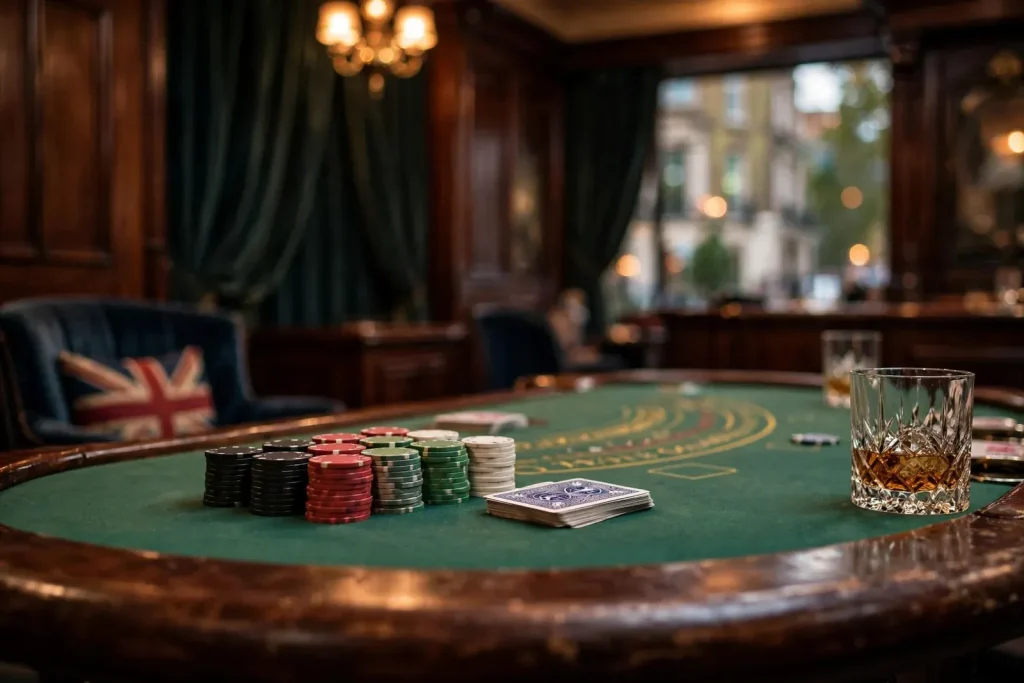
A practical guide to table limits, live-dealer play, licensing, blackjack rules, side bets and bonus conditions.
What Makes a Blackjack Casino Worth Your Time?
When I compare live blackjack options, I start with the price of taking a seat, not a badge saying “best”. There is no single table that suits every budget, and a polished lobby does not make its stakes affordable. The useful question is whether the tables on offer fit the amount you have decided you can spend.
Start by opening the table details before you join. Look for the minimum stake and any maximum, then check whether those limits apply to the table you actually want to play. A casino may show several blackjack tables, but the limit on one does not tell you what another will cost. If the figures are tucked behind a table information button, take a moment to find them. Better than discovering the minimum after you have taken a seat.
The difference between games can be noticeable. A specialist review has reported live roulette and baccarat tables starting at around 20p, while blackjack tables often have higher starting limits. Treat that as a reported comparison, not a fixed price list for the UK: table limits can vary, and the figure in a review may not describe the table available to you now. Check the current stake shown at the table itself.
When choosing a live blackjack casino, payout timing is one practical detail to consider alongside the game experience. Use these listings to see the payout speed provided for each operator.
-
WinBeast
- Payout speed
- 1-3 business days
WinBeast has a listed payout speed of 1–3 business days, giving you a clear timing detail to consider.
-
Chanze
- Payout speed
- 1-3 business days
Chanze lists a payout speed of 1–3 business days, which you can factor into your choice.
-
Zombillion
- Payout speed
- 1-3 business days
Zombillion’s listed payout speed is 1–3 business days, a useful point for you to keep in mind.
-
EvoSpin
- Payout speed
- 1-3 business days
EvoSpin lists payouts at 1–3 business days, providing you with a stated timeframe to consider.
-
Dieselwin
- Payout speed
- 1-3 business days
Dieselwin has a stated payout speed of 1–3 business days for you to take into account.
-
SlotoSport
- Payout speed
- 1-3 business days
SlotoSport lists a payout speed of 1–3 business days, giving you one practical detail about the operator.
-
NightWin
- Payout speed
- 1-3 business days
NightWin’s listed payout speed is 1–3 business days, which may help inform your decision.
-
SpinFormula
- Payout speed
- 1-3 business days
SpinFormula lists payouts at 1–3 business days, a timing detail for you to consider.
-
Revery Play
- Payout speed
- 1-3 business days
Revery Play has a listed payout speed of 1–3 business days, giving you a stated timeframe to weigh.
-
Britsino
- Payout speed
- 1-3 business days
Britsino lists a payout speed of 1–3 business days, one concrete detail you can use when considering it.
That check matters because a minimum bet is not just a number on a screen. It sets the smallest amount you can risk on each hand at that table. If it is above your planned stake, moving to a lower-limit table is the sensible response; stretching your budget to fit the table is not. If there is no suitable option, leave it for another time. No need to negotiate with the interface.
I also look at the range of limits rather than treating the lowest one as the whole story. A low minimum can make a table accessible, but you still need to know whether you can keep your spending within the budget you set. A maximum limit matters too if you prefer to keep every wager within a personal cap. Read both ends of the range before joining, and do not assume that a limit shown for one table carries over to the rest of the lobby.
The name of the game is only part of the decision. What counts as a good fit is a table whose stakes leave you room to play without feeling pushed to raise your spend. If the minimum makes you uncomfortable before the first hand, that is useful information. You do not have to make the table work for you.
I would also make the budget decision away from the table, before the session begins. Choose an amount you can afford to lose, stick to it, and stop when you reach it. A live table can make each decision feel immediate; that is no reason to revise your limit mid-session. The budget is there to guide your choice, not to become a target you chase.

When you are comparing a live blackjack casino in the UK, the practical checks are simple: see which tables are available, confirm each table’s current limits, and decide whether those stakes suit your budget. This is a better test than relying on a “best casino” label, because a table that is a poor financial fit for you does not become suitable through a ranking or a glossy presentation.
It is also worth separating the appeal of a particular table from what you can comfortably spend there. You might prefer one table’s presentation, but if its minimum does not fit your budget, another option—or no session at all—is the better choice. Set your budget first, then use the displayed limits to narrow your choice. If the numbers do not line up, walk away. A neat lobby is not a reason to spend more.
My own rule is to check the stake before I settle in, not after. It takes little effort, and it removes one avoidable surprise from the decision. There is no need to treat a high limit as a sign of quality, either. For this choice, affordability and clarity matter more than the size of the stake.
This is a practical comparison, not gambling advice. Blackjack is entertainment, and spending should stay within the limit you set for yourself. If the available tables do not suit that limit, the most useful choice may simply be not to play.
Do
- Check the minimum and maximum stakes before joining
- Set your budget away from the table
- Move to a lower-limit table if stakes are too high
Don't
- Stretch your budget to fit a table
- Assume one table's limit applies to the whole lobby
- Revise your budget mid-session
At the Live Table, the Dealer Is Real
The difference is right there on screen: a person is dealing, not an animation simulating a casino table. In a live blackjack game, a human dealer handles physical cards from a standard deck while the action is streamed in real time. You watch the cards being dealt as they appear, rather than seeing a result generated as a graphic.
That changes the feel of a session. The dealer’s movements give the game a visible human rhythm: cards are picked up, handled and dealt in front of the camera. You are not sitting at the same physical table, but you can follow what is happening as it unfolds. No mystery there; just cards and a camera.
The dealer is part of the experience, not merely a voice reading prompts. Some live tables let you use chat to communicate with the dealer, and some allow messages between players too. Depending on the table, chat can make the session feel more social than playing alone against a digital interface. It can also be left alone. You do not have to turn a card game into a group conversation.
That distinction is useful if you are choosing between a live dealer blackjack casino and a digital version. With a live table, you can see a human handling the cards and may have a way to interact with the people at the table. A digital game presents its action through software instead. Neither format requires you to chat, but only the live setting can give you that direct connection to a dealer.

Chat is a feature, not a promise of a private conversation. You may be able to send a short message or greeting, but the dealer is running a game and may not respond at length. Other players can be present in the chat where that option is offered, so treat it as a shared table space rather than a one-to-one exchange. If you prefer to concentrate quietly, you can simply watch the deal and leave the messages alone.
When I’m looking at a live table, I pay attention to whether the camera makes the dealer and cards easy to follow. That is not a claim about which casino is best; it is just the practical difference between a view that lets you see the action and one that feels detached from it. The point of the format is the visible, real-time dealing. If the dealer and cards are on screen, you can follow the human part of the game instead of imagining it happening somewhere off-screen.
A live dealer blackjack casino UK page may describe the table as interactive, but the word can cover a modest feature: seeing the dealer and, where available, using chat. It does not mean you are physically sharing a table, or that the dealer can change how the cards are dealt for you. The cards remain physical, and the stream lets you watch the hand from your device.
So the appeal is straightforward. You get a human dealer, physical cards and a live view; chat may add a little table-side conversation. If those details make blackjack feel more involving to you, the live format has a clear difference from a digital game. If not, the camera and chat are just extra furniture.
Blackjack Sites: Check the Licence Before You Play
When you’re looking at a site offering live blackjack, start with the operator’s licence, not the table graphics or welcome banner. Live dealer casinos can operate legally in the UK when they hold a licence from the UK Gambling Commission (UKGC). That is the basic check for a UK player.
I make sure I know which company is actually running the casino. A site’s brand name and the legal operator behind it may not be the same, so don’t assume that a familiar-looking name tells you who is responsible. Find the operator details on the site and compare them with the information in the UK Gambling Commission’s public register. If you can’t tell which company you’re checking, pause rather than filling the gap with a guess.
The point is not to collect badges. It is to confirm that the company offering the gambling service is licensed for it in the UK. A logo or a line of text on a page is not the same as checking the operator against the regulator’s record. I treat the register as the reference, and the casino’s own description as something to verify.
Take care with similar names, too. A search result, advert or social post can lead to a site that looks close to another one. Check the actual web address and the operator details on the site you intend to use; don’t transfer trust from one brand to a lookalike. It is a small pause before you make an account, but a useful one.

If the details don’t line up, or you cannot establish which operator is behind the site, don’t deposit while you try to work it out. Move on until you can verify the company. A polished page does not settle the licensing question. Nor does an offer saying “UK players welcome”. The licence is the point.
This applies whether you’re comparing blackjack casino sites or have already landed on a particular table. The game being live does not change the site-level check: a live dealer casino serving UK players needs the relevant UKGC licence. A site’s claims about its games are separate from that basic requirement.
There is no need to turn this into a hunt for a “best” or “top” blackjack casino site before checking the operator. First establish that the casino is licensed for the UK market; only then consider whether its offering fits what you want. A list of attractive features cannot replace that check, and a licence alone does not tell you whether a site suits your preferences.
Once you have confirmed the operator, keep the licence check in its proper place: it answers who is authorised to provide the service, not whether you will enjoy a particular table or win. Those are different questions. I’d rather spend a moment confirming the company than rely on a confident-looking badge. Not glamorous. Still worthwhile.
This page is for entertainment purposes only and is not gambling advice.
How Blackjack Works—and Why No System Guarantees a Win
Blackjack has a simple aim: finish with a hand that beats the dealer’s without going over 21. That is the basic answer to how casino blackjack works, whether you are at a physical table or playing online. The target is not to reach 21 at any cost; a hand that goes over loses its chance to beat the dealer.
That sounds straightforward, but it does not turn each hand into a puzzle with a certain solution. You are trying to achieve the better total, while the dealer’s hand also matters. A strong-looking hand is not a guaranteed win, and a close result is not something a staking pattern can fix. The objective stays the same; the outcome of each hand can vary.
It helps to separate understanding the goal from believing you can control the result. Knowing what you are aiming for makes the game easier to follow. It does not remove the uncertainty, or change the fact that blackjack retains a house edge. In practical terms, the game is not built to promise a player a profit over time. A run of wins can happen, but it does not prove that a system has beaten the game.
That is where betting systems can sound more convincing than they are. The Martingale, for instance, involves increasing a stake after a loss in an attempt to recover earlier losses when a win arrives. The idea may look neat on paper. In play, losses can continue, and the growing stakes can become difficult to sustain. A system can alter how much you stake and when; it cannot guarantee that the next hand will win.

I would treat any “sure way to win” claim with caution. A sequence of bets is not a change to blackjack’s underlying edge, and a previous result does not make a future hand certain. If you choose to play, decide on a budget beforehand and stick to it rather than raising it to chase losses or trying to extend a winning run. That is a limit on your spending, not a method for beating the dealer.
The same distinction matters online. The interface may make the game feel quick to act on, but the goal remains beating the dealer without going over 21, and the house edge remains. There is no staking formula that turns that into a guaranteed return. If you want to play, keep the aim clear and your expectations modest. The edge stays put.
This section is for entertainment purposes only, not gambling advice.
Side Bets and Bet-Behind Options
A live blackjack table can offer more than a place to make a standard hand wager. Some include side bets, while others let you use Bet Behind to wager on a hand being played by someone else. These are optional table features, not a requirement to join in. Whether either appears depends on the particular game, so check the table interface before you settle in.
Side bets are separate choices
A side bet is an additional wager offered alongside the main blackjack game. The table may present it as a separate option on the betting screen, with its own rules and payout information. The important point is that its terms belong to that wager: do not assume that a side bet follows the same conditions as your main bet just because both sit on the same table.
I would read the description before adding anything. Look for what the bet is based on, what result counts as a win, and how the payout is shown. If the explanation is unclear, leave it alone and play without it. A side bet can look like a small extra button, but it is still a separate decision about where your money goes.
Side bets also make a table screen busier. You may see several marked areas or prompts around the main betting position. Take a moment to distinguish the main wager from any optional ones before confirming your choices. If you click through quickly, it is easier to place a bet you did not mean to make. Not thrilling, just avoidable.
The name of a side bet is not enough to tell you how it works. Rules and payouts can vary between live blackjack games, so avoid carrying assumptions from one table to another. Read the information for the table you are actually joining, including any paytable or rules displayed there. That is the useful detail; a familiar label is not a substitute.
What Bet Behind lets you do
Bet Behind is an option to place a wager on another player’s hand rather than taking a playing position of your own. You follow that hand as it is played, while your wager is associated with its result under the table’s stated rules. It can suit someone who wants to watch a live hand and take part financially without being the person making the hand decisions.

That does not make it a spectator feature with no risk. Your money is still at stake, and the outcome of the hand matters to your wager. Before using Bet Behind, check how the table handles the option, which hand you are backing, and what happens if the main player makes a choice during play. The exact arrangements are for the table to explain; do not fill in the gaps from a different casino Blackjack game.
It is also worth keeping the social side separate from the money side. Watching another player can make a live session feel more involving, but their decisions do not turn a wager into a safer one. If you are unsure what you are backing, skip the option. You can still watch the table without adding that extra commitment.
Make the choice before the hand begins
When the betting screen opens, check which areas are active and what each one represents. A live blackjack casino game may show side bets, Bet Behind, both, or neither. Availability can differ across games, so do not expect the same set of choices everywhere. The on-screen rules are the place to confirm what is offered at that table.
Set your budget before you begin, then decide whether you want to use any optional feature at all. Keep side bets distinct from the main wager in your own thinking: adding one changes how much you have put at risk, even if the interface makes it look like a minor extra. Bet Behind deserves the same care, since you are wagering on a hand played by someone else.
- Read the specific rules and payout information for the side bet
- Confirm which hand you are backing if using Bet Behind
- Verify the total amount at risk including optional bets
- Ensure the choice fits within your pre-set budget
If you are comparing blackjack casino games in the UK, treat these options as features to understand, not reasons on their own to choose a table. A screen with more buttons is not automatically a better fit. I would rather have clear rules and know what I am agreeing to than chase every extra prompt. Simple enough.
Live tables can also display the rules and payout details in different places. Find them before placing an optional wager, rather than trying to work them out after the hand starts. If the table does not make the terms clear to you, there is no need to use the feature. You can play the main game without side bets or Bet Behind where those options are available.
This is entertainment, not gambling advice. Optional wagers do not change the need to keep to the budget you set, and no table feature removes the possibility of losing. The calmest choice is often to understand each button first, then use only the ones you genuinely want.

Live Blackjack in the UK: What to Expect in 2026
Live blackjack combines a streamed table with controls on your screen. The game comes from a studio, where a human dealer handles the cards in real time; you use the on-screen interface to place your bets. That is the basic distinction from a digital version: the action you watch is being dealt live, while your decisions are entered online.
It helps to think of the screen as two things working together. One part shows the studio table and the dealer’s actions. The other lets you take part by selecting and submitting a bet. You are not handling physical cards yourself, and you do not need to be in the studio. Your view of the game arrives through the stream; your bet is sent through the interface.
That setup can make an online casino blackjack table feel more like a shared, live event than a game running entirely on software. But the screen does not change what the format is: a real-time broadcast paired with online betting controls. If you are comparing live blackjack with a digital game, start with that practical difference rather than assuming the live version is simply a more polished screen.

The interface matters because it is where you participate. Take a moment to see how the table displays your selection and confirms that it has been placed. The stream and the controls are parts of the same experience, but they serve different purposes: one lets you follow the table, the other lets you act. Keep your attention on both before the game moves on.
For someone searching for live blackjack online at a UK casino, this is the format to expect: studio gameplay in real time, with bets made through an on-screen interface. The label “live” describes how the table is presented; it does not mean you are sitting beside the dealer or touching the cards. A clear picture may make the game easier to follow, but it is still an online activity, and you remain responsible for what you choose to stake.
I would not mistake the streamed setting for a promise of better results. It changes how you see the game, not the fact that you are gambling. Set a budget before you begin and stick to it; if you find yourself trying to win back losses, step away instead. This is entertainment, not gambling advice.

That is the format in a nutshell: a live studio feed, a human dealer, and an interface for placing bets. Once you understand how those pieces fit together, you can decide whether watching a live table suits you better than playing a digital version.
The Rules Behind a Blackjack Hand
The aim in blackjack is straightforward: finish with a hand worth no more than 21 points and beat the dealer’s hand. You are not trying to collect the most cards or reach 21 at any cost. The total matters, and going over 21 puts you beyond the target.
That gives the game two parts. First, your hand must stay within the limit. Then its value has to come out ahead of the dealer’s. A hand below 21 can still meet the objective if it beats the dealer; reaching exactly 21 is not the only way to win. It is the comparison between the two hands, with the limit in mind, that defines the basic goal.

When you look up blackjack casino rules in the UK, keep that simple test at the centre: 21 or less, and higher than the dealer. It is easy to focus on the number 21 because it gives the game its name, but chasing that exact total is not the same as understanding the rules. A hand that goes past the limit has missed the mark, even if it looked strong a moment earlier. A lower total is not automatically a losing one.
I find that distinction useful when you are new to casino blackjack. “Get as close to 21 as possible” is a rough shorthand, but it can be misleading if you take it literally. The goal is not simply to make your own total as large as you can. Your hand needs to remain within the limit and beat the dealer’s. The dealer’s hand is part of the objective, not just background to your own total.

Think of the rule as a boundary followed by a comparison. Stay at 21 or below; then your hand must be better than the dealer’s. That is the basic measure behind blackjack rules at a casino, whether you are reading a table’s explanation or following a hand as it plays out. It also helps keep the language clear: 21 is the ceiling, while beating the dealer is the aim.
There is no need to dress that up as a promise of success. Knowing what counts as the goal tells you how a hand is judged; it does not make the outcome certain. Blackjack remains a gambling game, so treat it as entertainment, not gambling advice. Keep the objective in view, and the central rule is easy to remember: stay within 21 and finish ahead of the dealer.
Before You Play: Pace, Connection and Table Limits
A live blackjack session asks for a little more time and preparation than a digital game. The pace is slower, and the minimum bet is higher, so a table that looks appealing may not fit the way you want to play. Check its displayed limits before joining; don’t assume they match the stakes you’re used to in a digital version.
Joining a Table
-
1
Check connection
Ensure you have a stable internet connection to avoid a frozen stream or interrupted session.
-
2
Verify limits
Read the displayed minimum and maximum stakes to see if they fit your budget.
-
3
Review rules
Check the table's specific conditions and payout details on screen before placing a bet.
That check matters for your budget, not just convenience. Decide what you are comfortable spending before you start, then choose a table whose minimum bet sits within that amount. If the opening stake feels too high, leave the table and look for another option rather than stretching your budget to get a seat. There is no need to force it.
The slower rhythm is part of the format. You have time between decisions, but a live session may still feel less brisk than playing against software. I find it helps to settle in without expecting rapid rounds. If you are fitting a game around a short break, the pace may not suit; if you want a more measured session, it can feel less hurried. Your own preference is the point.
Connection is the other practical detail. Live games rely on a stable internet connection, so use a setup you trust before you join. If your connection is already unreliable, waiting until it is steadier is the sensible call. A frozen stream or interrupted session is a poor time to discover that your signal is weak.
Before you sit down, read the table limits and rules shown on screen. Check that the minimum stake is manageable and that you understand the table’s conditions. Keep your budget in mind while you play, and stop when you reach the limit you set. No clever timing makes a table cheaper.
If you are trying a free-play version, treat it as a way to get familiar with the interface, not a source of real payouts. It can help you see how the on-screen controls are arranged, while leaving the money decision for a real-money table. Take that step only if the displayed limits suit you and your connection is stable.
Live blackjack is entertainment, not a way to make money. A calm start is better than rushing in.

Blackjack Bonuses: Read the Terms First
A welcome offer can look useful until you try to apply it to live blackjack. A specialist review reports that many UK welcome offers are free spins for slot games, which cannot be used at live tables. So if you are looking for a blackjack casino bonus, check what the offer actually gives you before counting it towards your play.
The same review notes that live games may contribute only a small share towards wagering requirements, with 10% given as an example. That means a live blackjack bet may do much less to meet an offer’s turnover condition than you expect. The exact weighting is set out in the individual promotion’s terms, not in the headline.
I’d read the full conditions before opting in, especially the eligible games, contribution rates and maximum bet rules. Also check whether the bonus itself can be used at a live table, or whether only your own cash balance is accepted. Those are separate questions, and a banner saying “casino bonus” does not answer either one.
The label matters less than the detail. A blackjack casino bonus offer could be a deposit promotion, free spins restricted to slots, or an offer with live games excluded. A no-deposit promotion is no exception: check whether blackjack is eligible and whether any winnings from it are subject to conditions. Do not assume that a “no deposit” label means unrestricted play or withdrawable winnings.
For a blackjack bonus in an online casino, compare the conditions with how you actually intend to play. If live blackjack has a low contribution rate, the promotion may add little value to that session. If the game is excluded, it offers no help at the table at all. Plain terms, plain outcome.
I would not opt in just because an offer mentions casino play. Read the full rules first, including wagering requirements, game weighting and maximum bets, then decide whether the conditions suit you. If they are unclear, leave the promotion alone. This is for entertainment, not gambling advice; set a budget before playing and stick to it.
How can you win live dealer roulette?
You win when the ball lands on the number you selected. Roulette still has a house edge, so no betting system guarantees a win.
Why does the dealer always win in blackjack?
The dealer does not always win, but blackjack retains a house edge, so the casino has a mathematical advantage over time.
How does the house edge change between games?
In roulette, it varies by bet: straight-up bets have a 2.9% house edge, while other bets have a 2.7% edge. In French Roulette, an even-money bet loses only half when the ball lands on zero.
How do you choose a live dealer casino?
Choose a casino that holds a UK Gambling Commission licence, then check the live tables’ current minimum and maximum stakes against your budget. Live games also run more slowly than digital versions and need a stable internet connection.
What are the different types of roulette you can play with a live dealer?
Common versions include European Roulette, with one green pocket (0), and American Roulette, with two (0 and 00). French Roulette is another version; on an even-money bet, you lose only half if the ball lands on zero.
How do you play live roulette?
Place your bet using the on-screen interface, then watch the live dealer spin a physical wheel. You win if the ball lands on a number you selected.
Casino Games in the UK: Slots, Live Play and More
Content created by the «luxurytrump» team