
Check the cashier before making a small deposit
 Available in US
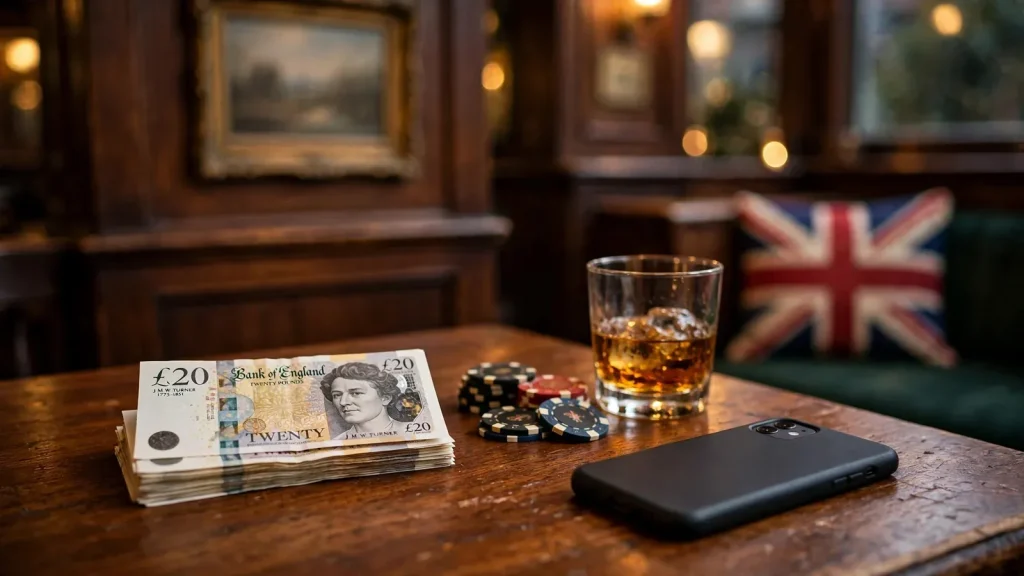
A stated £4 threshold may not apply to every payment method, and the live cashier wording matters more than figures repeated in reviews.
What a £4 Minimum Deposit Really Tells You
A £4 minimum deposit sounds precise, but it describes one part of a casino’s cashier policy: the smallest amount the operator says it will accept under the relevant conditions. It does not mean every payment option will accept that amount, or that the same threshold applies at every casino. The cashier is where the rule becomes concrete.
I read “minimum deposit” as a threshold, not a recommendation. If a site states a £4 minimum, that tells you what the operator allows at that level; it does not say that £4 is the only amount you can add, or that a larger deposit is necessary. Nor should you assume that a figure shown in a general review will match the live cashier. Policies can differ between operators and can change, so the current wording matters more than a number repeated elsewhere.
There is some context worth keeping in mind: a few UK casinos accept deposits starting at £1. A specialist review recorded six UKGC-licensed casinos with a genuine £1 cashier minimum, but that is a snapshot rather than a permanent market-wide count. A £4 threshold is therefore not the lowest possible, even if it is the amount you are looking for. It sits between the rare £1 entry point and operators that set a higher minimum.
If you’re looking for a casino with a £4 minimum deposit, check the deposit terms before you pay in, as well as how withdrawals are handled. The listed payout time can help you assess what to expect after requesting a withdrawal.
-
WinBeast
- Payout speed
- 1-3 business days
WinBeast lists a payout time of 1–3 business days. Check its deposit terms to confirm whether it suits your £4 minimum-deposit search.
-
Chanze
- Payout speed
- 1-3 business days
Chanze lists a payout time of 1–3 business days. You’ll need to check its deposit terms to confirm whether it suits your £4 minimum-deposit search.
-
Zombillion
- Payout speed
- 1-3 business days
Zombillion lists a payout time of 1–3 business days. Check its deposit terms to see whether it matches your £4 minimum-deposit requirement.
-
EvoSpin
- Payout speed
- 1-3 business days
EvoSpin lists a payout time of 1–3 business days. Its deposit terms will confirm whether it fits your £4 minimum-deposit search.
-
Dieselwin
- Payout speed
- 1-3 business days
Dieselwin lists a payout time of 1–3 business days. Check the deposit terms before deciding whether it meets your £4 minimum-deposit needs.
-
SlotoSport
- Payout speed
- 1-3 business days
SlotoSport lists a payout time of 1–3 business days. You’ll need to check its deposit terms to confirm whether it accepts a £4 minimum deposit.
-
NightWin
- Payout speed
- 1-3 business days
NightWin lists a payout time of 1–3 business days. Review its deposit terms to see whether it fits your £4 minimum-deposit search.
-
SpinFormula
- Payout speed
- 1-3 business days
SpinFormula lists a payout time of 1–3 business days. Check its deposit terms to confirm whether it suits your £4 minimum-deposit requirement.
-
Revery Play
- Payout speed
- 1-3 business days
Revery Play lists a payout time of 1–3 business days. Its deposit terms will tell you whether it fits your £4 minimum-deposit search.
-
Britsino
- Payout speed
- 1-3 business days
Britsino lists a payout time of 1–3 business days. Check the deposit terms to confirm whether it meets your £4 minimum-deposit needs.
The distinction between an operator’s general minimum and a payment-specific minimum can catch people out. At a given UK operator, the stated minimum is often shared across payment methods. Some casinos, however, require more for direct banking than for card or e-wallet payments. So a £4 figure may describe the cashier overall, or it may apply only to particular routes. You need the operator’s terms for the option you intend to use before treating it as available.
That is why the phrase “£4 minimum deposit casino” should not be taken as a promise that every route at that casino will accept £4. A site may advertise a low threshold while placing a different condition on one payment method. The reverse can happen too: the general figure may look higher, while a particular route has its own lower threshold. The detail is in the cashier rules, not in the neatness of the headline.
It also helps to separate a minimum from a balance target. A cashier threshold tells you what may be deposited; it says nothing by itself about how long that balance will last, what you might win, or whether you can later withdraw a particular amount. Those are separate questions. For now, the useful point is simply that £4 is an entry condition, not a forecast of what your play will look like.

When I compare the wording, I look for whether the amount is described as applying to all payment methods or to a named option. If the terms are vague, I do not fill in the gap with an assumption. A general site description can be useful for narrowing things down, but it is not a substitute for the live cashier information. Small print earns its keep here.
There is one practical consequence of the £4 figure: it can help you rule out a casino whose stated threshold is higher, but it cannot confirm that your preferred payment route will work at that amount. Treat the number as a starting point for checking, not a guarantee. The same caution applies when you see a lower figure elsewhere: a minimum that applies to one route may not apply to another.
I would also keep the wording current. A page may have been written when an operator had one cashier policy, while the live site now shows another. That does not make the older figure useless, but it does make it a prompt to verify rather than a rule to rely on. A couple of minutes checking the current terms can prevent a needless surprise.
So, if you are looking for a UK casino with a £4 minimum, focus first on what the cashier actually says and whether that threshold covers the payment method you plan to use. Some sites accept less; some set a higher amount for particular routes. £4 is a useful comparison point, not a universal promise. The cashier has the final word.
How to Judge a £4 Casino Without Chasing a ‘Best’ Label
A “best” label tells you very little about whether a casino suits you. For a £4 minimum deposit, the useful question is narrower: can you deposit that amount under the cashier rules, and can you later withdraw on terms you understand? A site may advertise a low entry point while setting separate conditions that matter more once you want your money back.
Start with the cashier minimum shown for your account, not an old comparison page or a headline. The minimum can depend on the operator, and it is generally shared across payment methods at a given casino. There are exceptions: some operators set a higher minimum for direct banking than for cards or e-wallets. So a £4 figure is a starting point to verify, not proof that every payment option will accept it.
Then look beyond the deposit box. Find the withdrawal terms before you pay in. Check whether the casino sets a minimum withdrawal, whether it differs by payment route, and whether the terms explain what happens if your balance is below that threshold. A specialist review has reported minimum withdrawal levels of £10 to £20 at many UK casinos, but that is a review’s snapshot, not a dependable rule for every operator. The cashier and the operator’s current terms are the places to confirm the position.

This matters because a small deposit and a small withdrawal are not the same thing. You might be able to put a modest amount into an account but still need a higher balance before a withdrawal can be requested. If that condition is not clear, do not assume you can cash out any remaining amount whenever you choose. I would rather see an unexciting, clearly stated rule than a glossy promise that leaves the important bit in the small print.
“Legit” and “trusted” are also worth translating into checks you can actually make. For a casino serving customers in Great Britain, the operator must hold the relevant UK Gambling Commission licence. A familiar name or polished site design is not a substitute for that. Look for the operator’s licensing information and make sure it corresponds to the business running the casino, rather than relying on a badge with no explanation.
Read the account and complaints information as well. UK-licensed operators must provide an internal complaints process and access to an approved Alternative Dispute Resolution service. That does not tell you whether you will enjoy the games or how quickly an issue will be resolved. It does tell you that there should be a route to raise a dispute if something goes wrong. Useful, not glamorous.
The cashier is only one part of the fit. Before your first deposit, a remote operator must prompt you to set a financial limit and provide accessible account-level controls. Take that prompt seriously. Decide what you can afford to lose before you fund the account, then set a limit that reflects that decision. A low entry amount can make a site feel harmless; the limit is what helps keep later decisions within your plan.
Do
- Verify the current cashier minimum for your account
- Check withdrawal terms before paying in
- Confirm the operator holds a UK Gambling Commission licence
- Set a financial limit before funding the account
Don't
- Rely on old comparison pages or headlines
- Assume small deposits allow for small withdrawals
- Trust a polished site design over licensing info
- Treat a low entry amount as a sign the site is harmless
For a comparison, I would note the cashier minimum, the withdrawal threshold, the payment-specific exceptions, and where to find the licence and complaints details. You do not need to turn this into a scoring contest. If one casino accepts £4 but its withdrawal terms are hard to locate, while another makes those terms plain, that difference may matter more than a “top pick” badge.
The same checks apply if a newly discovered casino claims to be suitable for low-deposit play. Treat its stated minimum as something to confirm in the live cashier, and its wider claims as something to verify against its terms and licensing information. Avoid relying on a single review for details that can change. A low cashier minimum is a useful feature only when the rest of the account rules make sense to you.
For online slots, the deposit figure does not tell you whether the site is a good match for the way you want to play. It says what the cashier may allow you to put in. Withdrawal conditions, licensing, and clear account controls give you a better basis for deciding whether to proceed. No ranking needed.
Making a Small Deposit at an Online Casino
A cashier minimum is only useful if it applies to the payment route you intend to use. A casino may advertise a £4 minimum deposit, but the amount shown beside a particular option in the cashier is the one to check before you proceed. The advertised figure describes the operator’s rule; the payment screen tells you whether your chosen method can meet it.

At a UK casino, the minimum is generally set for the account rather than separately for every payment option. There can be exceptions: an operator may ask for a higher amount when you use direct banking than it does for a debit card or e-wallet. So a £4 minimum does not automatically mean every route will accept a £4 deposit. I would check the selected method itself, not infer its threshold from the headline.
The practical way to check is to sign in, open the cashier and select the method you plan to use. Look for the minimum shown there before entering an amount or confirming a payment. If the cashier states a higher threshold for that option, the advertised £4 figure will not override it. You can then decide whether another permitted method suits you better, rather than discovering the mismatch at the final step.
Payment rules matter too. UK casinos cannot accept credit cards for gambling deposits. The UK’s credit-card gambling ban took effect in 2020, so use a debit card, an e-wallet funded by debit, or a bank account. A wallet that can draw on credit-card funds is not a suitable workaround. If you are unsure how a wallet is funded or what it can use for gambling, check its funding settings and the casino’s payment terms before relying on it.
A debit card and a bank account are not interchangeable labels in the cashier. The operator may show them as separate options, with separate instructions and potentially different minimums. If direct banking is available, check its own displayed threshold rather than assuming it matches the card option. The same goes for an e-wallet: seeing it listed does not by itself confirm that your selected amount will be accepted.
Checking Deposit Minimums
-
1
Select the method
Sign in and open the cashier, then select the payment method you plan to use.
-
2
Verify the threshold
Look for the minimum amount shown specifically for that option before entering any funds.
-
3
Confirm final details
Read the cashier’s final confirmation to ensure the amount and method are correct before authorising.
Before making a first deposit, complete the account steps the operator requires. A UK-licensed casino must verify your age before it allows you to deposit, and you must be at least 18 to gamble legally. You should also be prompted to set a financial limit before your first deposit. Take that prompt seriously and choose a limit you can afford; it is part of setting up your account, not a payment-method detail to rush past.
When the amount and payment option are clear, read the cashier’s final confirmation before authorising anything. Check that the amount displayed is the amount you intended to send and that the method is the one you selected. If the cashier changes the minimum after you choose a route, pause and check the operator’s terms or contact its support team. Do not assume that repeating the attempt will make a rejected amount acceptable.
For someone looking for an online casino with a £4 minimum deposit in the UK, the useful distinction is between a site-wide threshold and the threshold attached to a specific payment route. The operator’s headline may be £4, while a particular route has a higher entry point. That is not necessarily a contradiction; it is a reason to inspect the cashier before paying. A small deposit should still be a deliberate one.
I would also avoid treating a payment option as suitable just because its name is familiar. The rules are about the source of the funds as well as the method shown on screen. A debit-funded e-wallet is within the permitted routes; credit-card gambling deposits are not. If you cannot tell whether a payment would use credit, choose a clearly permitted alternative instead of guessing.

Once you have checked the account requirements, the displayed minimum and the source of funds, you can tell whether £4 is actually enough for that deposit. Keep the decision at the cashier, where the operator’s current instructions apply, rather than relying on a general claim that every method accepts the same amount. Small deposit, clear terms.
Playing for Real Money on Your Phone
A £4 balance can feel more substantial on a phone than it is. The screen is close, the next game is one tap away, and a balance can disappear in small deductions before you have stopped to think about the total. I try to treat the figure as a fixed play budget, not as a reason to keep adding funds if a session goes badly.
At many slots, a spin can cost between £0.10 and £0.20. At those stakes, £4 covers a run of spins rather than just a handful, but there is no promised playing time: wins, losses and the stake you choose all change how quickly the balance moves. A game that looks affordable at first can still use the balance faster than you expect if you raise the stake after a losing run.
On mobile, keep an eye on the displayed balance and the amount selected for each play. Small controls can make it easy to overlook a stake change, especially when switching between games. Before starting, decide what you are prepared to spend and set a financial limit in your account. If you reach it, stop; a phone makes it easy to continue, not wise to do so.
Real-money play also means thinking about the point at which winnings can actually be withdrawn. A balance shown on screen is not necessarily ready to cash out. A specialist casino review reported minimum withdrawal thresholds of £10 to £20 at many UK casinos; treat that as a report from that review, not a rule that applies everywhere. The cashier’s terms for your account are what matter.
That difference matters when you begin with £4. You might build the balance through play and still find it below the operator’s withdrawal threshold. You may need to keep playing before a withdrawal is available, and further play can reduce the balance. Do not assume that a small win will be payable immediately just because it appears in your account.
I check the withdrawal page before getting absorbed in a game, then make sure I understand any conditions attached to taking money out. The important point on a mobile casino is not just whether the game runs on your phone; it is whether the balance and cash-out rules make sense to you on that small screen. If the relevant terms are hard to find, pause rather than guessing.
A £4 minimum deposit online casino can suit someone who wants to keep an initial session tightly bounded. It does not make the games safer, guarantee a return, or remove the need to understand withdrawal rules. Think of the deposit as money you can afford to lose, and use account controls before play rather than relying on willpower once a session is underway.

Phones also make it easy to play in spare moments, when you may not be paying close attention. I avoid starting a real-money session when I cannot follow the balance or when I am tempted to recover losses quickly. That is where a modest deposit stops being a useful boundary and becomes just the first top-up. Keep the session deliberate. Small balance, clear limit.
Bonuses on a £4 Deposit: Check the Conditions First
A cashier accepting £4 does not mean a welcome offer will start when you deposit it. The cashier minimum and the promotion’s qualifying minimum are separate rules. A casino can allow a small deposit into your balance while setting a higher threshold for its bonus. Read the offer terms before opting in, rather than assuming the deposit amount is enough.
A specialist casino review describes welcome offers as commonly requiring deposits of £5 to £10, and reports that some bonuses have a £10 qualifying minimum even where the cashier accepts £5. Treat those figures as a guide to what one review reported, not a promise about every casino. The practical point is simpler: a £4 deposit may be accepted as cash but leave you outside the promotion.
The same distinction applies when an offer is described as a “no-deposit bonus”. That phrase means the promotion is not necessarily activated by making a deposit; it does not mean every player can claim it without conditions. Check who is eligible, whether registration or another action is required, and whether the offer is available to UK customers. Do not deposit just because a promotion appears beside a small-deposit option.
I check the terms for the qualifying deposit, the opt-in requirement and what happens if I decline the bonus. If the promotion is optional, accepting it can change how winnings are treated. If you want to play with your own balance, make sure you understand whether the offer attaches automatically or whether you can leave it unclaimed. Clear wording matters more than the size of the headline.
Wagering conditions are another reason to slow down. Since 19 January 2026, UK Gambling Commission rules cap wagering requirements on bonus funds at 10x. That does not make every bonus alike: the terms can still specify which games count, how winnings are handled and whether other restrictions apply. Read the full conditions, not just the short offer banner. If a promotion’s wording appears to require more wagering than the permitted cap, do not assume the banner tells the whole story; check the operator’s terms and raise the issue with the operator.
A welcome offer is not extra cash with no strings attached. Once you accept it, you may have to meet the stated conditions before the bonus-related balance can be withdrawn. The exact treatment depends on the offer, so look for the rules on eligible games and any withdrawal caps. A small qualifying deposit can therefore lead to a larger set of conditions than you expected. Not a free pass.

If you are comparing a £4 minimum deposit casino with a bonus, compare the promotion separately from the cashier. Confirm that the offer is open to you, that your deposit qualifies, and that the terms comply with the current UK rules. A “no deposit” label or a large advertised bonus does not answer those questions. Nor does a site’s availability outside GamStop establish that it is authorised to offer gambling to people in Britain: operators serving the British market must hold a UK Gambling Commission licence.
Before any first deposit, set a financial limit you are comfortable with, whether or not you plan to claim a bonus. Then decide if the promotion is worth accepting on its actual terms. If those terms are hard to find or unclear, leave the bonus alone.
Small Stakes on Slot Sites
A £4 balance can look more substantial on a slot page than it does in the cashier. The useful comparison is between your balance and the stake you choose for each spin. Many slots allow bets of £0.10 to £0.20 per spin, so £4 represents 20 to 40 spins’ worth of stake at those levels, before accounting for any returns.
That is a rough measure of play, not a promise that the balance will last for that many spins. A winning spin can return money to your balance; a losing one reduces it by the stake. Results vary, and a run of losses can use up a small balance quickly. The arithmetic is clear. The outcome isn’t.
Before opening a game, check its stake controls. Some slots offer several stake settings, while others may not let you choose the amount you have in mind. If the lowest available stake is more than you want to risk, switch games rather than treating a £4 deposit as a reason to play bigger. A lower stake does not make a game predictable, but it gives your balance more room to absorb losing spins.
It also helps to decide how much of the balance you are willing to use before you start. A small deposit is still money at risk, even when each individual spin seems inexpensive. Set a financial limit before your first deposit, and use the account controls to keep to it. Once you reach the amount you meant to spend, stop; chasing a balance back is how a small session turns into a larger one.
When comparing slot sites, look for games whose available stakes suit your budget, rather than assuming every title has the same settings. The game’s information panel or stake selector can show what you can wager before you play. If the controls are unclear, choose another title. There is no need to test your way into a stake you did not intend to make.
Keep the distinction between a deposit and a stake in mind. Depositing £4 puts money into your account; it does not mean you must wager the whole amount at once, nor does it guarantee a particular session length. Your chosen stake determines how much each spin puts at risk, while the game’s results determine how the balance changes afterwards.
For a modest session, the practical approach is simple: choose a slot with a suitable minimum stake, set your spending limit, and treat the balance as entertainment money rather than a target to grow. A small stake can make each spin cost less, but it cannot remove the risk built into slot play.
PayPal and Other E-Wallet Deposits
Looking for a £4 minimum deposit through PayPal? Treat the figure as something to confirm in the casino’s cashier, not as a promise attached to the wallet itself. At a particular UK operator, the cashier minimum is generally shared across its payment options. There are exceptions: direct banking may carry a higher threshold than a card or an e-wallet.
So if the cashier shows £4 as the site’s minimum, that does not by itself confirm that every listed method will take that amount. Select the payment option and check the amount displayed before continuing. PayPal availability and the minimum accepted for it are operator-specific; don’t assume a PayPal button means a £4 transaction will go through. The same check applies to other e-wallets.
There is a more important boundary than the cashier minimum: the source of the funds. The UK’s credit-card gambling ban dates from 2020. Deposits must come from permitted sources such as a debit card, a bank account or an e-wallet funded by debit. A wallet that relies on credit-card funds is not a suitable route for a gambling deposit. If you are unsure how your wallet is funded, check that before using it.
Keep direct banking in mind as a separate option, not a shortcut around the cashier’s rules. An operator may ask for a higher amount through that route while allowing a smaller deposit by card or e-wallet. That difference belongs to the operator’s payment setup, rather than being a universal rule about PayPal.
- Confirm the e-wallet is funded by debit, not credit
- Check the specific minimum accepted for the wallet in the cashier
- Set a financial limit on your account
- Verify you are at least 18 years old
Before your first deposit, set a financial limit and make sure you are old enough to open and use the account. Then check the displayed minimum for the method you actually plan to use. A small amount in the account is only useful if the payment route accepts it. Check first.
Checking a Newly Found Casino Before You Deposit
A newly discovered casino advertising a £4 minimum deposit still needs the same basic checks as a familiar one. A low figure on a page does not, by itself, establish that the site is permitted to serve people in Great Britain. Remote gambling operators serving the British market need the relevant UK Gambling Commission licence, wherever the business is based. Check the operator against the Commission’s register rather than relying only on a badge or claim on the casino’s own site.
Age is not a box to tick later. You must be at least 18 to gamble online in the UK, and an operator must verify your age before allowing you to deposit. If a site appears willing to take money before completing that check, stop there. I would also set a financial limit before making a first deposit; licensed operators must prompt new customers to do so and provide account-level controls.
Then look at the payment route, not just the advertised cashier minimum. UK gambling deposits cannot be made by credit card. Use a debit card, an e-wallet funded by debit, or a bank account. A payment option shown in a cashier is not automatically suitable if it relies on credit-card funding. The UK credit-card gambling ban has applied since 2020, including when credit-card funds are routed through a money service business.
For a new £4 minimum deposit casino, I would confirm that the operator is licensed, that the account is verified before money is accepted, and that the selected payment method is permitted. If those details are hard to find or the site pushes you to deposit before you can check them, leave the cashier closed. A small first payment is still real money. No need to rush.

Paying by SMS: Why the £4 Minimum Needs Checking
Paying through a mobile phone bill is not the same as using a debit card or e-wallet, so check the cashier’s terms before relying on it for a £4 deposit. A site may advertise a low minimum deposit while the mobile-billing option has different conditions, or is not available at all.
A specialist review describes the £1 deposit tier as rare and linked to particular mobile-billing services, including Boku and Payforit. That is a useful indication that phone billing can be associated with small deposits, not proof that every casino offering it will accept £4. Nor does a mention of SMS payments confirm that the method is currently offered to UK customers.
Before trying it, open the cashier and select the mobile option to see the minimum shown for your account. Check whether the payment is charged to your phone bill or deducted from prepaid credit, and read any limits or fees displayed by the provider. If the listed minimum is higher than £4, the advertised figure does not change that.
There is another practical point: a phone-billed payment is still a gambling deposit. UK players must be at least 18, and legal online casinos serving them need a UK Gambling Commission licence. Use a permitted payment route and set a spending limit before depositing. If the cashier does not clearly explain the charge or its minimum, choose another available method rather than guessing.
The small print matters. A low deposit tier tied to one payment route should not be treated as a promise that SMS will work at the same amount everywhere. Check the specific cashier entry, not just a general payment-method description.
Can I use a £1 deposit to claim all welcome bonuses?
No. Welcome offers typically require a £5 to £10 deposit, and some casinos exclude the lowest deposit bracket from promotions.
Can players claim a bonus with a small deposit?
Yes, if the deposit meets the offer’s qualifying minimum. Welcome offers typically require £5 to £10, and some bonuses require at least £10.
Can I take out winnings from a £1 deposit?
You may be able to, but a £1 deposit does not guarantee you can withdraw a small balance: many UK casinos set minimum withdrawals of £10 to £20, while some set them at £1 to £5. Check the current withdrawal terms and any payment-method conditions.
Which payment methods usually accept £1 deposits?
Debit cards and some e-wallets can support £1 deposits; Boku or Payforit mobile billing may also be used for low deposits. Check the cashier, since some casinos set higher minimums for particular payment methods.
Casinos in the UK: Deposits, Licensing and Access
Content created by the «luxurytrump» team