
Get to Know the Reels Before You Wager
 Available in US
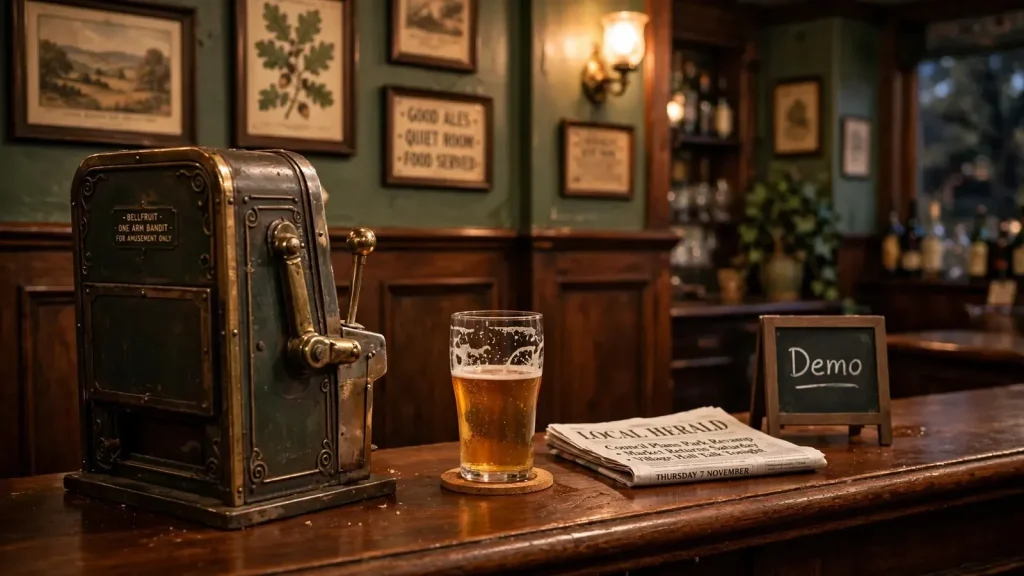
A practical guide to demo play, classic-slot features, real-money choices, UK rules and safer-play controls.
Free Classic Slots: Try the Reels Before You Bet
A demo is a way to open a classic slot and look around before wagering. You can see how the game is laid out, where its controls sit and what features it offers, without treating the first spin as a decision about money. When I’m looking at a title I haven’t tried before, that small rehearsal is more useful than guessing from a thumbnail or a name.
The label “free” can cover different ways of presenting a game, so check that you have opened its demo version rather than a real-money mode. Once it loads, take a moment to read the screen. Find the spin control, the pay information and any feature instructions. The point is not to rush through spins; it is to understand what the game is showing you.
That matters with a three-reel classic slot as much as with a more elaborate title. A classic 3-reel slot machine may look simple at first glance, but the layout and feature notes still tell you how to read it. The demo gives you time to inspect those details without placing a wager. There’s no prize for acting as if you already know the game.
When choosing a classic slots site in the UK, payout timing is one practical detail to check alongside the games and terms. Use this reference to see which listed operators state a withdrawal timeframe.
-
WinBeast
- Payout speed
- 1-3 business days
WinBeast lists a payout speed of 1–3 business days, giving you a stated timeframe to consider when choosing a site for classic slots.
-
Chanze
- Payout speed
- 1-3 business days
Chanze lists a payout speed of 1–3 business days. This gives you a clear stated timeframe to factor into your choice.
-
Zombillion
- Payout speed
- 1-3 business days
Zombillion lists a payout speed of 1–3 business days, a useful detail for you to check when considering classic slots.
-
EvoSpin
- Payout speed
- 1-3 business days
EvoSpin states a payout speed of 1–3 business days. You can use that timeframe as one point of reference when choosing.
-
Dieselwin
- Payout speed
- 1-3 business days
Dieselwin lists payouts as taking 1–3 business days, giving you a stated timing detail to consider.
-
SlotoSport
- Payout speed
- 1-3 business days
SlotoSport lists a payout speed of 1–3 business days. That gives you a published timeframe to keep in mind when exploring classic slots.
-
NightWin
- Payout speed
- 1-3 business days
NightWin states a payout speed of 1–3 business days, providing you with a clear detail about payout timing.
-
SpinFormula
- Payout speed
- 1-3 business days
SpinFormula lists a payout speed of 1–3 business days. You can consider this stated timeframe as part of your site selection.
-
Revery Play
- Payout speed
- 1-3 business days
Revery Play lists payouts as taking 1–3 business days, giving you a stated timeframe to consider.
-
Britsino
- Payout speed
- 1-3 business days
Britsino states a payout speed of 1–3 business days. This provides you with a specific timing detail when reviewing your options.
I use a demo to answer practical questions. Are the symbols and pay information easy to read on my screen? Is the main control where I expect it to be? Does the game include a feature I want to understand before deciding whether to play? You can explore the answers at your own pace. If the presentation feels confusing, close it and try another free classic slot; there is no need to make a game fit your taste.
A demo can also help you distinguish between titles that appear similar. Two classic slots may share a familiar look while presenting their information and features differently. Playing classic slots for free lets you notice those differences first-hand. It is a more grounded way to explore than assuming every game with a traditional style works in the same way.
Keep the purpose clear, though. Free play is for learning the game’s layout and features before wagering. It is not a reliable way to predict what a later real-money session will do, and a run of demo results tells you nothing about what comes next. Treat it as a look around, not a forecast.
There is no need to try every title you see. Pick one that interests you, check its instructions and give yourself enough time to understand what is on screen. If you find you are clicking without knowing what a control does, pause. That is precisely the sort of uncertainty a demo can clear up before money is involved.
 Progressive Slots Online in the UK: How They WorkLearn how shared jackpot pools are funded, what a 1%–3% contribution means, and how odds, demo play and UK licensing fit into…
 Online Craps Casinos in the UK: Checks Before You PlayLearn why a UKGC licence does not confirm a casino offers craps, and what licensing, lobby and account checks can establish before…
I’d also decide in advance how long I want to browse. Setting time limits is recommended, and a demo is a useful place to learn without wagering; neither requires you to turn casual exploration into a long session. A short, attentive look often tells you whether you want to continue with that game or move on. Keep it simple.
Free classic slots online are best approached as a preview, not a promise. You can explore classic slots online free, compare the feel of different games and learn where their information is displayed. If a title suits you, you can make a separate decision later about whether to wager. If it doesn’t, close it. The demo has still done its job: you learned enough to move on without having to discover the basics at the cost of a bet.
What Makes a Classic Slot Feel Classic?
A classic slot is usually recognisable before you have read its rules: a small set of reels, bold symbols and a straightforward idea at the centre. Line up matching symbols in the right arrangement and they can form a winning combination. The exact symbols and patterns depend on the game, so the familiar look does not mean every title works in precisely the same way.
Fruit, bells, stars and sevens are common shorthand for the style. They give the screen a direct, uncluttered feel: you can see what the game is built around without first learning a cast of characters or following a story. I find that simplicity is much of the appeal. You watch the reels, recognise the symbols and understand that their positions matter. No grand explanation required.
The important word is “matching”, but matching alone does not tell the whole story. A game sets out which combinations count, and a symbol’s position can determine whether a line pays or the result is simply a near miss. Two reels showing the same symbol may look promising, yet the arrangement still has to meet that title’s rules. The game’s paytable is where those rules are described; it is worth treating it as part of the game, not as small print you can safely ignore.
Classic slots can also vary in how they present the reels. Some lean into a traditional fruit-machine appearance, while others borrow the familiar symbols and layout but give them a newer visual treatment. That means “classic” describes a style rather than one fixed design. A simple screen can still belong to a game with its own particular symbol set and win patterns.
There is a useful distinction between what you see and what determines the result. Reels and symbols make the outcome readable to you; they do not make a pattern more likely because it looks due. Some slots use a random generator to produce results. In those games, the symbols that appear are generated outcomes, and a player’s task is to understand how the title interprets the combination shown. The display can feel familiar, but familiarity is not a prediction.
That is why I would start with the symbols rather than the artwork when trying to understand a classic slot. Notice which icons are used, what the game counts as a matching combination and how its paytable describes the result. A polished theme may catch your eye, but the symbol rules tell you what is actually happening on the reels. Small distinction. Big difference.

This basic vocabulary helps make sense of the many games described as classic slots online in the UK. Some keep the presentation spare; others add visual touches while holding on to the same reel-and-symbol idea. The label alone cannot tell you the precise rules, so check the individual game. Once you know what the symbols mean, the screen becomes easier to read—and you can judge the style on its own terms, rather than assuming every familiar-looking slot behaves alike.
How to Play Classic Slots Without Guessing
Before you spin, take a moment to look over the controls. Classic slots often keep the main choices close to the reels: you may see a stake control, a setting for active lines and a spin button. The layout varies, so check what each control changes rather than tapping through on autopilot. A quick look now can save you from playing with settings you did not mean to choose.
If the game lets you alter the number of active lines, decide how many to use before spinning. Some slots allow you to change this manually; others may not offer the choice. When it is available, the control might sit beside the stake setting or in a game menu. Confirm the selection on screen after changing it. A line setting is part of how you configure a spin, not a way to steer where the symbols land.
Do
- Confirm the active-line setting before spinning
- Confirm the selected stake on screen
- Treat each spin as its own independent event
Don't
- Tap controls on autopilot
- Assume a larger stake improves the odds
- Try to time your spin to influence results
The stake control is another choice to make deliberately. It changes how much you put into a spin, but betting more does not make a particular result more likely. Nor does choosing a smaller stake improve the odds. I find it helps to separate two things that are easy to muddle: the size of the wager and the chance of a random outcome. They are not the same control.
The same goes for timing. Pressing spin at a particular moment, waiting between spins or tapping quickly does not influence random results. There is no useful rhythm to learn, and a near miss is not a signal that a win is due. Treat each spin as its own event. The reels may make a familiar game feel hands-on, but timing your tap does not give you control over the result.
A simple routine keeps the session clear. Check the active-line setting if the game offers one, confirm the stake, then start the spin. Once the result appears, take it as the outcome of that spin rather than a clue about what the next one will do. If you change a setting, pause long enough to see that the display reflects it before continuing. That is practical attention, not a strategy for predicting the reels.
When you play classic slots online, the controls can look slightly different from one title to another. Some games put the line and stake options directly on the main screen; others tuck them into a menu. The same basic approach still works: identify what you can change, check the selected settings and avoid reading patterns into random results. If you are using a classic slots app, the controls may be arranged for a smaller screen, so make sure you can see the selected values before you spin.

There is no need to turn every session into a system. Choose settings you understand, use the controls as intended and remember that neither stake size nor spin timing changes a random outcome. Straightforward, really.
Classic Slot Machines: Holds, Nudges and Other Features
Holds and nudges are features that can make online fruit machine games feel closer to a traditional machine. They change what you can do around a spin, rather than simply adding another symbol to the reels. The details are title-specific, so I’d look for an explanation on the game screen before assuming a familiar feature works in a familiar way.
A hold lets you keep a reel in place instead of having it take part in the next spin. A nudge moves a reel by a position after the result appears. In games that offer them, these controls can give you a choice about what happens next; they do not turn the result into a guaranteed win. The screen should show whether an action is available and what it will affect. Read that prompt, rather than relying on what another game did.
The important wrinkle is that availability varies. Some online fruit machine games may offer more than one hold or nudge on a single spin. Others make the feature available only under particular conditions. You might therefore see a feature in a game’s description but not have it available on every turn. That is part of the title’s rules, not a sign that the controls have failed.
Hold
A feature that lets you keep a specific reel in place instead of having it spin in the next round.
Nudge
A control that allows you to move a reel by one position after the result has appeared.
I find it useful to separate the two ideas. A hold keeps a reel where it is; a nudge shifts its position. If a game offers both, the instructions should make clear which control you have and when you can use it. Take a moment to check before pressing anything. The small print on the game screen matters more here than the cabinet-style look.
These features are not a standard package attached to every classic slot machine. One title may offer several chances to intervene, while another may have no holds or nudges at all. Even within games that include them, the conditions can differ. So don’t choose a game on its appearance alone if you specifically want this kind of interaction: check its rules or help panel first.
The same point applies when you play classic slot machines online free. A free version can help you get used to where the controls appear and what the game says when a feature is available. It is a way to learn the layout, not a promise that every title uses the same rules. If you move to another game, read its instructions afresh.
For me, holds and nudges are most interesting when they are clearly explained and easy to distinguish. They give a fruit-machine-style game an extra decision point, but they are still features governed by that game’s rules. Check what each control does, when it appears and whether more than one is offered on a spin. Familiar appearance, different rules.

Classic Slot Games on Modern Screens
A classic-style game can keep the familiar reel layout while adding features that would not fit on a simple fruit-machine-style screen. The result varies from title to title: one may stick to its basic symbols, while another adds wilds, free spins or a small pick-style game between spins. “Classic” describes the feel, not a fixed set of features.
Wild symbols can stand in for other symbols to help form a combination, where the game’s rules allow it. Check the paytable to see which symbols a wild can replace and whether any exceptions apply. A free-spin feature gives you spins without a new stake for each one, but its trigger and rules belong to that particular game. I always look at those details before playing; a flashing feature label tells you very little on its own.
Some classic slot games also pause the reels for a pick-style mini-game. You might be asked to choose from objects on screen, with the result set by that title’s rules. It can break up the reel play, though it does not make the underlying game a skill test. Read the feature description rather than assuming every choice changes your chances in the same way.
The screen itself matters too. Many titles are designed to work on a phone as well as a larger display, with controls and symbols arranged to suit the device. A responsive web version can adapt the game to your screen without requiring you to treat every title as a separate app. On a smaller display, paytable text and feature instructions may take a little more attention, so rotate or enlarge the view if the game allows it. No need to squint at the rules.
Menus may show quick-spin controls, but the available options are governed by the game and the rules for the market. In Britain, online slot spins must last at least two and a half seconds, so a quick-spin setting cannot make spins run faster than that. Autoplay is banned for online slots in Britain; a feature appearing in descriptions of fruit machine games does not mean it is available for British online play.
That distinction is worth keeping in mind when reading about classic casino slot games from different markets. Feature lists can describe what a game includes somewhere, not necessarily every control you will see in a British version. Even within one style, titles differ in their symbols, bonus rounds and screen layout. The game’s own information is the useful bit.
Free classic slots can be a straightforward way to get familiar with where the paytable and feature descriptions sit on screen. Treat that as a look at the game’s layout, not as evidence about what a real-money session will return. A feature-rich classic fruit slot game is still one particular title, not a template for all classic slots. Some bells and whistles; some don’t.
Choosing a Classic Slot That Suits You
A classic slot can look simple at first glance, but two games with similar reels may work quite differently. I compare them by starting with the parts that shape a spin: the symbols, the win rules and any choices the game lets you make. That gives you a more useful basis for picking than a bright cabinet or a familiar-looking logo.
Start with the paytable or game information screen. Check which symbol combinations can pay and where they need to land. A slot’s winnings depend on the symbols you line up, so the pictures are more than decoration. A game may use familiar fruit or number symbols, but the rules decide how those symbols count. If the explanation feels unclear, take a moment to read it before starting. Guessing is an awkward way to learn a game.

Next, look at the paylines. Some titles let you change how many lines are active; others set the arrangement for you. If you like having a choice, confirm that the game offers one and find out how the selection works. If you would rather keep decisions to a minimum, a fixed setup may feel easier to follow. Neither format is automatically better. The point is to know what you are choosing before a spin begins.
Then check the features listed for that particular title. Classic-style games can differ in the extras they include, and a feature that sounds appealing in a short description may not be central to the way you want to play. Read the in-game rules rather than assuming that a familiar theme means familiar mechanics. Game details vary, even when the reels look much alike.
Your preferred pace and level of involvement matter, too. One game may keep the screen and choices spare; another may add more prompts or features to follow. Think about whether you want to concentrate on matching symbols or enjoy a busier presentation. This is a matter of personal taste, not a measure of quality. Flashier is not necessarily a better fit.
Online play makes it easier to browse a broader mix of classic slots, with different stake options and the freedom to visit at a time that suits you. That range is useful, but it does not remove the need to check each game’s own information. A title’s available stake settings, line options and feature rules are specific to that game and may not match what you saw elsewhere.
- Check the paytable for winning symbol combinations
- Verify if paylines are adjustable or fixed
- Read the specific rules for any included bonus features
- Confirm the available stake settings suit your budget
I would make a short comparison rather than trying to crown one game as the best. Note what symbols form winning combinations, whether paylines are adjustable, and which features are actually included. If one detail matters to you, give it more weight than a list of general recommendations. The “best” classic slot is simply the one whose rules and style you understand and enjoy—not a promise that it will produce a particular result.
If you are considering classic slots at a casino, keep the game choice separate from the site choice. A good match on screen does not tell you everything about the operator, and an appealing casino page does not tell you how a particular slot works. Check both independently, and confirm that the title’s details fit what you are looking for before playing. A little reading first.
Classic Slots at UK Casinos: The Rules Behind the Screen
A classic slot may look like a small, self-contained game, but the rules governing the casino behind it are much broader. In the UK, the Gambling Commission regulates gambling activity, including online casinos. For commercial gambling in Great Britain, it is the sole regulator.
That matters when a game is offered online to people in Great Britain. The Commission’s remit covers remote gambling aimed at those consumers even when the operator’s key equipment is located somewhere else. A server’s address does not, by itself, put a casino outside the rules that apply to serving this market.
The system works through different kinds of licences. Businesses need operating licences for the gambling activities they provide. Individuals who carry out certain operating roles may need personal licences. Those are not interchangeable: one relates to the business and its services, the other to people working in relevant positions.

For you, the useful point is that regulation concerns the operator as well as the game. Whether you are browsing classic casino slots on a laptop or using a responsive web version on a phone, the slot’s familiar reels do not tell you who is responsible for offering it. The operator is the part of the arrangement that sits within the regulatory framework.
There is also a geographical distinction worth keeping straight. The Gambling Commission regulates remote gambling offered to consumers in Great Britain; the UK is not always a precise synonym for Great Britain in legal matters. That distinction is easy to miss in casual conversation, but it matters when describing the regulator’s remit. The Commission is the sole regulator for commercial gambling in Great Britain, while its stated role also covers gambling activity in the UK, including online casinos.
I’d treat the regulator as the framework, not as a badge that tells you whether a particular classic slot will suit you. It does not explain a game’s symbols, features or layout; those details belong to the individual title. And a game’s presence on a screen is not the same thing as knowing which business is offering it.
So when you see classic slots online, think beyond the reels for a moment: the rules apply to the gambling service being offered, not merely to the software’s physical location. Businesses and relevant individuals have distinct licensing roles, and remote operators cannot sidestep the Commission’s remit simply by keeping equipment abroad. That is the machinery behind the screen. Not the fun bit, but an important one.
Licensing and Regulation
The Gambling Commission is the sole regulator for commercial gambling in Great Britain. It issues operating licences to businesses and personal licences to individuals in specific roles, ensuring remote gambling aimed at GB consumers is regulated regardless of where the operator's equipment is located.
Playing Classic Slots for Real Money
With classic slots for real money, each spin uses funds in your gambling account and any win is credited as cash rather than shown as a demo balance. That changes the feel of a session, but not the way the game decides its results. The reels do not become more predictable because money is involved.
In Great Britain, online slots have a maximum stake of £5 per game cycle for customers aged 25 and over. This is a ceiling, not a suggested stake or a promise that every game will offer the same range of options. The amount you choose within a game’s available settings affects how much you put at risk on a spin; it does not improve the odds of a particular symbol combination.
I’d treat the stake setting as a budget decision, not a way to steer the reels. A larger bet does not make a win more likely, and changing the timing of a spin does not alter its outcome. Licensed sites use random number generators, or RNGs, so each spin is independent and unpredictable. A run of losses does not make a win due, and a recent payout does not make another one less likely. Past results leave the next spin’s probability unchanged.
That point is easy to lose when a classic-themed slot has familiar symbols and a simple-looking layout. A sequence can feel as if it is building towards something, especially after near-matches or a long stretch without a payout. But the game is not keeping score in the way a player might. Each spin is its own event.

For real-money play, it helps to decide what you are comfortable spending before you start and to keep that amount separate from any expectation of winning it back. A slot can return less than you stake, or nothing over a session; there is no reliable pattern to use as a recovery plan. If you notice yourself raising the stake to chase losses, stepping away is more useful than trying another setting.
The practical distinction is straightforward: a demo lets you explore without risking cash, while real-money play puts your balance at stake. Once you move to cash play, keep an eye on the amount committed, not on a supposed “hot” or “cold” streak. Those labels are just stories we tell ourselves.
Classic Slot Sites: Accounts and Safer Play Controls
Before you can gamble online, you need to be at least 18. Classic slots sites also verify your age and identity when you create an account, and must check your age before letting you deposit. It is a routine part of getting started, not an optional extra.
When you enter your details, take a moment to make sure they are accurate and consistent. If an operator needs information to complete its checks, follow the instructions in your account. A delay at this stage can be frustrating, but trying to work around verification is not a shortcut worth taking.
Set limits before play
Account controls are easiest to use when you decide on them before depositing. Remote operators must prompt new customers to set a financial limit before their first deposit and provide accessible account-level limit controls. You can also set a time limit to help keep a session within boundaries you are comfortable with.
These controls are separate from the rules of a game. A classic fruit slot may have familiar symbols and a simple layout, but that does not make it easier to keep track of time or spending once you are playing. I find it sensible to decide in advance what a session is for, then use the account settings to support that decision. A limit is a boundary, not a target.
If your circumstances change, review the controls in your account rather than assuming an old setting still suits you. The point is to make it easier to keep play within your own plan, not to treat a limit as a reason to spend more.

Know when to step away
UK-licensed casinos must provide responsible gambling tools, including self-exclusion. If you decide you need a break, look for the self-exclusion option in the account area and read what it does before confirming. It is designed to help prevent access to gambling, rather than simply mute reminders or hide a game from view.
If you are comparing classic slots casinos UK players can use, look beyond the game lobby and see whether account controls are easy to find. A clear route to limits and self-exclusion matters more than a polished menu. It is also worth knowing where the operator explains its account checks and how to contact support if you have a question about them.
People sometimes approach account setup as a hurdle between them and a spin. I would treat it as the moment to check that the account details are right and the controls are usable. For online classic slots, that small bit of housekeeping makes it easier to stay in charge of how you play. Keep your login details private, and use the account’s own security and help options if something looks wrong. Short pause. Worth doing.

Classic Slots: Downloads, Browser Play and Bonus Terms
You do not need to assume that a classic slot requires an app. Many games can be opened through a casino’s browser version, while some operators also provide an app or downloadable software. The exact choice depends on the operator and the title: check how the game is offered before installing anything. A responsive web version can be a straightforward option if you want to play without a download, but availability and presentation may differ between games.
If you are looking for classic slots without downloading software, try a demo in your browser where one is available. It lets you get used to the layout and features before wagering, and you can see whether the controls are comfortable on your device. A demo is for familiarising yourself with the game, not a promise that its real-money version will be available under every offer.
Downloads are a matter of access, not a shortcut to better play. Before installing, check that the software comes from the operator you intend to use and that the specific title is supported. If you prefer not to install anything, look for browser access instead. Simple enough.
Bonuses need a separate check. Some offers have wagering requirements, and the details can affect when winnings become withdrawable and which games count towards the requirement. A specialist affiliate review reported an offer in which a 40x wagering requirement had to be met to receive 25 extra spins on the Sharkanade Slot. That is a report about a particular offer, not a standing rule for classic slots.
A separate stated condition requires the bonus to be wagered 30 times before withdrawal. Read the current promotion’s terms rather than assuming that a game qualifies because it appears in the casino lobby. Check eligible-game rules, the wagering condition and any other requirements before opting in. Offers change; the small print is where the practical answer sits.
Can I play fruit machine games for free?
Yes. Demo versions let you explore a game's layout and features without wagering.
Are online fruit machine games fair?
Licensed sites use random number generators, making each spin independent and unpredictable. Past results, timing and bet size do not change the odds of the next spin.
What controls help manage my play?
You can set deposit or time limits. You can also use a demo to learn a game's features without wagering.
What are the online slot stake limits in Great Britain?
For customers aged 25 and over, online slots are capped at £5 per game cycle.
How do I know if a site is trustworthy?
Look for an operator licensed by the UK Gambling Commission, which regulates remote gambling offered to consumers in Great Britain.
Slots: Casino Guides by Provider and Game
Content created by the «luxurytrump» team