
Check the cashier before treating £1 as enough
 Available in US
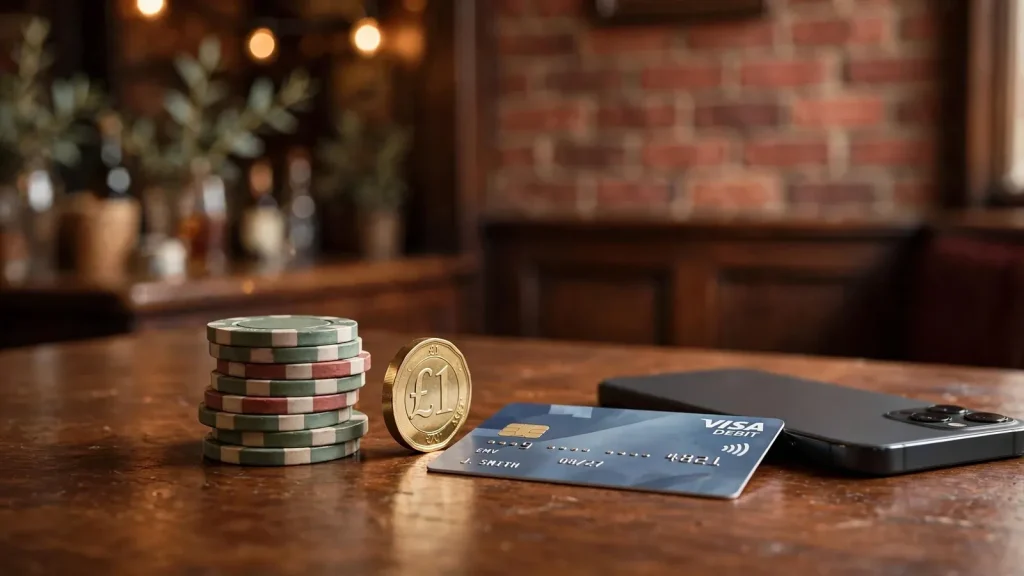
A low deposit threshold does not settle payment eligibility, bonus conditions or the minimum needed to withdraw.
Bitcoin and £1 deposits: check what the UK rules allow
A search for a Bitcoin casino with no minimum deposit combines two separate questions: whether a casino accepts Bitcoin, and what you can use to fund an account with a UK-licensed operator. For a UK player, start with the second question. A low cashier minimum does not change the rules on how gambling deposits may be paid.
The UK Gambling Commission’s credit-card gambling ban took effect in 2020. At a UK-licensed casino, deposits must come from a debit card, an e-wallet funded by debit, or a bank account. A credit card is not an acceptable workaround just because a wallet or payment service sits between the card and the casino. The payment route still matters.
That distinction is easy to miss when a site advertises several payment options. A wallet may be usable for gambling only if its funds come from an allowed source. If it lets you use credit-card funds for gambling, a UK-licensed operator cannot accept that payment. A familiar payment brand, or the fact that a transaction appears as a wallet transfer, does not by itself make the funding compliant.
If you’re looking for a casino with no minimum deposit, check the terms carefully before you play. This list notes the payout information available for each operator; it does not confirm their deposit requirements.
-
WinBeast
- Payout speed
- 1-3 business days
WinBeast lists a payout speed of 1–3 business days. Check its terms to confirm whether it suits your deposit requirements.
-
Chanze
- Payout speed
- 1-3 business days
Chanze lists a payout speed of 1–3 business days. Check its terms to confirm whether it suits your deposit requirements.
-
Zombillion
- Payout speed
- 1-3 business days
Zombillion lists a payout speed of 1–3 business days. Check its terms to confirm whether it suits your deposit requirements.
-
EvoSpin
- Payout speed
- 1-3 business days
EvoSpin lists a payout speed of 1–3 business days. Check its terms to confirm whether it suits your deposit requirements.
-
Dieselwin
- Payout speed
- 1-3 business days
Dieselwin lists a payout speed of 1–3 business days. Check its terms to confirm whether it suits your deposit requirements.
-
SlotoSport
- Payout speed
- 1-3 business days
SlotoSport lists a payout speed of 1–3 business days. Check its terms to confirm whether it suits your deposit requirements.
-
NightWin
- Payout speed
- 1-3 business days
NightWin lists a payout speed of 1–3 business days. Check its terms to confirm whether it suits your deposit requirements.
-
SpinFormula
- Payout speed
- 1-3 business days
SpinFormula lists a payout speed of 1–3 business days. Check its terms to confirm whether it suits your deposit requirements.
-
Revery Play
- Payout speed
- 1-3 business days
Revery Play lists a payout speed of 1–3 business days. Check its terms to confirm whether it suits your deposit requirements.
-
Britsino
- Payout speed
- 1-3 business days
Britsino lists a payout speed of 1–3 business days. Check its terms to confirm whether it suits your deposit requirements.
Bitcoin searches can make this sound more straightforward than it is. The fact that a site mentions Bitcoin does not establish that a UK-licensed casino can accept it for deposits. Nor does a promise of no minimum deposit answer the regulatory question. For a UK account, look at the payment options actually offered in the cashier and whether the source of funds fits the permitted routes. Do not treat a Bitcoin label as confirmation that a deposit is available or appropriate at a UK-licensed casino.
The practical check is simple: identify the method, then identify where its money comes from. A debit card is different from a credit card. An e-wallet funded by debit is different from one carrying credit-card funds for gambling. A bank-account payment is another permitted route. If you cannot tell which source is being used, pause rather than guessing. Payment names can be familiar; the funding rules are the important part.
This matters whether you are looking at a casino with a low minimum or one that does not advertise a minimum clearly. The cashier’s minimum is a separate detail from the payment method’s eligibility. A small amount does not make a prohibited funding source acceptable, and a permitted payment route does not mean every operator will set the same cashier minimum. Keep those questions separate when comparing sites.
 Non-Gamban Casinos in the UK: What the Label MeansLearn how “not on Gamban” differs from “not on GAMSTOP” and what licensing claims mean. UK-licensed online operators have had to take…
 No Account Casinos in the UK: How They WorkLearn how the label relates to registration, UK casino checks and payment flows, and why deposit options do not necessarily determine how…
For UK players, the wider licensing context matters too. Operators offering real-money gambling to customers in Great Britain must hold the relevant UK Gambling Commission licence. A site’s Bitcoin option, where advertised, should not be taken as proof that it is operating under that system. If your aim is to play at a UK-licensed casino, focus on the operator’s UK status and the payment methods available to its UK customers, rather than assuming that an option described for another market applies to you.
Before you deposit, check the casino’s cashier and the payment provider’s terms. Confirm that the option is available to UK customers, that you are using an allowed funding source, and that no credit-card funds are being routed into the gambling payment. If the cashier does not make the route clear, contact the operator before sending money. I would not make a deposit on the strength of a Bitcoin badge or a vague payment description.
There is also a basic account step before money goes in: operators must verify a customer’s age before allowing a deposit, and UK players must be at least 18. Remote operators must also prompt new customers to set a financial limit before their first deposit and make account-level limit controls accessible. Take a moment to set that limit before paying in. It is easier to decide while the balance is still untouched.
So, if you are considering a no-minimum-deposit Bitcoin casino in the UK, do not let the wording blur the two issues. A low or absent cashier threshold is about the amount accepted; the UK rules are about the source and route of the funds. Use a debit card, an e-wallet funded by debit, or a bank account, and do not use credit-card funding for gambling. Bitcoin wording alone settles nothing.
What a no-minimum-deposit casino actually means for real-money play
The phrase “no minimum deposit” sounds as though you can put no money in and still play for cash. That is not what it means. A deposit is money transferred into your casino account; a cashier minimum is the smallest amount the operator will accept in a transaction. If you want to play real-money games using your own funds, money has to reach the account first.
You may be able to register or look around a casino before depositing. That is different from having a real-money balance. An account can exist without being funded, but it does not give you money to wager. So when you see a claim about a no-minimum-deposit casino in the UK, check whether it describes account access, a promotional offer, or the actual amount the cashier accepts. Those are separate things.
For British players, the real-money context matters too. Online gambling is legal at sites licensed by the UK Gambling Commission, and operators serving the market must hold the relevant licence. You must be at least 18 to gamble. A casino’s wording does not change those requirements: an offer of free access or a small starting amount is not a substitute for a licensed operator or an age-verified account.
No deposit is not the same as a £1 deposit
In practical terms, a genuine zero-minimum deposit would mean that the cashier accepts a real-money deposit without requiring you to reach a stated minimum. A £1 cashier minimum is different. You still have to deposit money, but the threshold is low. Some UKGC-licensed casinos have been recorded in a specialist review as accepting genuine £1 minimum deposits; that is evidence of a low threshold, not evidence that real-money play needs no funding.

That distinction gets blurred in advertising. “No minimum deposit” can be used loosely for a site where you can create an account without paying in, or it can be attached to a promotion that gives you something to try. Neither statement proves that you can play cash games indefinitely without making a deposit. Read the wording around the offer and the cashier separately.
I’d treat the cashier as the deciding point. If it names a minimum amount, that is the amount you need to fund the account through the selected route. If it accepts £1, that is a £1 minimum—not a no-deposit arrangement. If you have not deposited, you have no personal funds in the account to stake. Simple, but the labels make it sound less so.
A small deposit may not unlock an offer
A further source of confusion is the gap between the cashier minimum and the promotional qualifying deposit. A casino might accept a small payment while requiring a higher deposit for a welcome offer. In that case, your money reaches the account, but the promotion does not activate. The two rules can sit side by side without contradiction.
A specialist review describing welcome offers put qualifying deposits in the £5 to £10 range. Treat that as a guide to the kind of threshold you may encounter, not a promise that every offer has the same terms. The offer’s own conditions decide whether your deposit qualifies. A £1 payment may be enough to fund an account at a particular casino and still be too small for its promotion.
Do
- Check the cashier for the actual minimum deposit
- Verify the qualifying deposit amount for bonuses
- Set a financial limit before paying in
Don't
- Assume "no minimum" means no money is needed
- Confuse the cashier minimum with bonus eligibility
- Skip account-level limit controls
This is why “real money” and “bonus” should not be treated as synonyms. Your deposited balance is your money in the account. A promotional reward is governed by its own eligibility rules. If an offer requires a qualifying deposit above the amount you plan to pay, the offer may not apply, even where the cashier accepts that smaller payment.
Before depositing, check the minimum shown in the cashier and the separate qualifying-deposit condition for any offer you intend to claim. Also set a financial limit before your first deposit; a low threshold is not a reason to skip that step. UK-licensed operators must provide account-level limit controls, so use them to decide what you are prepared to spend rather than relying on a headline that makes the starting amount sound trivial.
The useful question is not whether an account can be opened for free. It is whether the licensed casino accepts your intended real-money deposit, and whether any promotion has a different entry condition. A £1 minimum can be real. “No minimum” should not be read as “no money needed for real-money play.”
How £1 casino deposits work in practice
A £1 deposit is a small amount of real money, not a special way to play without funding an account. Once the cashier accepts it and the money appears in your balance, you can use that balance for real-money games, subject to the casino’s rules and the game’s own minimum stake. Some UK casinos accept deposits as low as £1, but that does not mean every game can be played for a penny or that every payment option will accept the same amount.

I find it helps to think of the deposit and the stake as two separate things. The deposit is the money you put into the account; the stake is what you choose to risk on a particular play. If a slot accepts a 10p stake, for instance, a £1 balance could cover several spins at that setting. At a 20p stake, it would cover fewer. Those are simple balance calculations, not a promise that you will get a particular number of spins: a game may have other stake settings, and any win or loss changes the balance.
That distinction matters because “small deposit” does not describe a single style of play. You might choose a game with a low minimum stake and make the balance last longer, or pick a higher stake and use it more quickly. A slot’s controls should show the stake before you play. Check the amount on screen rather than assuming that the lowest setting is selected; one extra tap can change what you are risking.
A £1 balance also gives you little room to absorb a run of losing spins. If you spend it all, the session stops unless you add more money. If you win, the balance may rise, but there is no reliable way to predict when that will happen. I would treat the deposit as the full amount available for that session, not as a starting point that needs topping up whenever it disappears.
Small Deposit Routine
-
1
Choose the amount
Select the deposit amount and confirm it in the cashier.
-
2
Confirm the balance
Wait for the transaction to complete and check that the money appears in your account.
-
3
Check the stake
Select a game and verify the stake amount on screen before each play.
Before making the deposit, set a financial limit you can afford to lose. UK-licensed casinos must prompt new customers to set a limit before their first deposit and provide account-level controls, but it is still worth deciding what your own boundary is. A small amount can make play feel harmless; the important thing is the amount you choose to risk, not how modest the first transaction looks. If the limit is reached, stop there.
At the cashier, enter the amount and check that the total shown is the amount you intended to deposit. If the operator accepts £1 for the method you have selected, the payment still has to be completed before that money becomes playable. A pending transaction is not a usable game balance. Once it appears, check the account balance before opening a game, especially if the screen has refreshed or you have returned to the cashier.
For a first try, I would keep the routine plain: choose the amount, confirm the balance, select a game, and check the stake before each play. That makes it easier to see how quickly the money is being used. It also avoids treating a low cashier minimum as a guarantee that every game, feature or payment route will work at that amount. The cashier sets the entry point; the game sets the cost of each play.
Some players look for online casino sites with no minimum deposit because they want to try a game without committing much money. In practice, the useful question is whether the casino will accept a small real-money deposit and whether the games you want have stakes that fit your budget. A £1 cashier minimum can be enough to start, but the balance is finite and the stake determines how far it goes.
There is no need to make the session complicated. Keep the amount small if that is what you intended, pay attention to the balance, and leave the cashier alone once you have reached your limit. A low entry point is only useful when it matches the way you actually want to play.
The UK £1 minimum: rare, and worth checking at the cashier
A genuine £1 cashier minimum exists at a UK-licensed casino, but it is not the same as having no minimum at all. In a specialist review’s checked list, NetBet was the only UK Gambling Commission-listed casino recorded with a £1 minimum deposit. Treat that as a specific finding, not a promise that every account, payment route or offer will accept £1 today.
That distinction matters when you are deciding where to play. A search for a casino with no minimum deposit can turn up wording that sounds as if you can start with nothing. For real-money play, you still need a deposit, and the cashier sets the amount it will accept. A £1 threshold is simply a particularly low one.
I would check the cashier itself before opening a payment screen. The minimum shown there is the practical figure for the method you have selected; a general claim on a review page may not reflect the current account terms. If the cashier displays a higher amount, do not assume that a different label elsewhere means your £1 payment will go through. The cashier is the point that matters.
NetBet is a useful named example because it gives the claim something concrete to check. The careful wording is that a specialist review identified it as the sole UKGC-listed casino on its list with a £1 cashier minimum. That does not make it a recommendation, nor does it mean the figure cannot change. Confirm that the operator is still serving UK customers under a current UK Gambling Commission licence and that the minimum shown to you matches the claim.
There is another point that deserves to come before the cashier: age. You must be at least 18 to gamble online in the UK, and a licensed operator must verify your age before allowing a deposit. If you are not 18, do not open an account to get around that requirement.
Before making any first deposit, set a financial limit you can afford to lose. Do that before the payment step, rather than after you have already started playing. A low cashier minimum can make a small payment feel inconsequential; it does not change the need to decide in advance what you are comfortable spending. Keep the limit clear, and use the account controls if you need to change it.
So, if you are looking for a UK casino that accepts a £1 deposit, the answer is yes: a specialist review’s list named NetBet as the UKGC-listed example. But “no minimum” is not quite accurate when the cashier requires £1, and the amount should be checked directly before you pay. A rare option, not a blank cheque.

Free spins and casino games: read the conditions before you play
A small deposit does not automatically come with free spins. When a casino links spins to a deposit, check the offer’s terms before you accept it: the cashier amount and the amount needed to qualify for a reward may not be the same. The spins may also be limited to a named game, so don’t assume you can use them across the whole casino.
The clock matters. A specialist review reports free-spin expiry periods ranging from 24 hours to 14 days, but that range is not a promise about any particular offer. Look for the exact expiry time in the promotion terms or your account. If you leave the spins unused past that point, they may no longer be available. Easy to miss.
Then check what happens to any winnings. A specialist review reports wagering conditions of 30x to 65x the total won from free spins. That means the displayed win may not be ready to withdraw: you may have to place qualifying bets before it becomes withdrawable. Read how the casino calculates the requirement, which games count, and whether there are restrictions on the amount you can stake while clearing it. The terms attached to the reward decide what you can do next.
This is separate from the deposit itself. A low cashier minimum can let you put a small amount into your account, but it does not tell you whether a free-spin offer is available or what conditions apply to its winnings. Treat the reward as its own set of rules, not as extra cash with no strings attached.
If you are comparing online casino games with no minimum deposit, focus on what the cashier actually permits and what the game-related offer requires. Some promotions are tied to a qualifying deposit; others may not be available with a small deposit at all. The useful detail is in the offer terms, not the headline.
- Check the expiry period of the spins
- Confirm the eligible game for the reward
- Review the wagering requirements for winnings
- Check for any withdrawal conditions
Before playing, check the expiry, eligible game, wagering attached to winnings and any withdrawal conditions that apply to the reward. Keep the cash balance and promotional winnings distinct in your mind; they may be treated differently. If anything is unclear, ask the operator before accepting the spins. A few lines of small print can change whether a reward is worth taking.
Slots on a small deposit: keep the stake in perspective
A small balance can give you time to try ordinary online slots, but the stake you choose matters more than the label on the game. Many slots allow bets of £0.10 to £0.20 per spin. At that level, each spin uses only a small part of your balance; raise the stake and the same balance runs down faster. There is no special “no-minimum-deposit” version of a slot: the cashier minimum and the game’s minimum bet are separate things.
Check the stake controls before you start. Some games open with a setting higher than you intended, and a tap in the wrong place can change the amount for each spin. I make a point of checking the displayed bet before playing, then leaving it alone. It is a small habit, but it avoids turning a low-stakes session into something else.
In Britain, online slot autoplay is banned, so you must start each spin yourself. Spins must also last at least 2.5 seconds. That makes rapid automatic play unavailable, though manual play can still move along quickly if you keep pressing the button. Taking a moment between spins helps you notice how much you have staked and whether you still want to continue.

There is also a legal ceiling on a slot stake per game cycle: £5 for players aged 25 and over, and £2 for those aged 18 to 24. Those are maximums, not suggested stakes. For a small balance, the lower bet options are the relevant ones; being allowed to stake more does not make it sensible to do so.
Before your first deposit, set a financial limit and use the account controls to keep it in view. Decide what you are comfortable spending before opening a game, rather than adjusting the figure after a run of spins. A slot result is uncertain, and a low stake does not make a loss impossible.
When browsing casino slots, compare the minimum bet shown in the game itself, not just the casino’s cashier minimum. A cashier may accept a small deposit while a particular game starts at a stake that does not suit you. Choose another slot if the controls do not offer a bet you are comfortable with. No need to force it.
PayPal and other payment methods: the minimum may not change
Choosing PayPal does not automatically lower the cashier minimum. At a given UK casino, the minimum is generally shared across its available payment options, although some operators set a higher threshold for direct banking than for cards or e-wallets. The figure shown beside a method in the cashier is the one to check before you choose it.
That matters if you are looking for a PayPal casino that accepts a very small deposit. PayPal may be available at one operator and absent at another, and its presence does not by itself mean you can pay any amount you like. Open the cashier, select the method you intend to use and check the amount the operator will accept. Don’t assume that a low card minimum carries over to PayPal.
Debit cards and e-wallets funded with a debit card are compliant options for gambling deposits. Credit cards are not: UK-licensed casinos cannot accept them for gambling, including when credit-card funds are routed through a money-service business or a wallet. If you use a digital wallet, its funding source matters too; a wallet that allows credit-card funds to be used for gambling cannot be accepted for that purpose.
Direct banking can have its own cashier minimum, but it is not automatically excluded from a welcome offer. At UK-licensed casinos, an eligible direct-banking deposit can qualify on the same basis as a card or e-wallet deposit. The promotion’s terms remain the same whichever of those payment routes you use. So check both the cashier amount and the offer’s qualifying-deposit rule; the payment method alone does not tell you whether a bonus will be awarded.
I would also check for any fee shown by your payment provider before confirming. A small deposit can be poor value if a charge takes a noticeable share of it. The operator’s cashier and the provider’s own payment screen are the places to confirm the amount and any cost.

For mobile billing, availability and the amount accepted depend on what the casino presents in its cashier. Don’t treat a mobile-payment option as proof that every small amount will go through. The same principle applies to PayPal: choose it only after confirming that it is offered to you and that the cashier minimum fits your plan.
Before making your first deposit, set a financial limit in your account. The cashier tells you what you can pay; your limit helps decide what you should pay.
Bonus terms changed in 2026: check the wagering cap
A cashier accepting a small deposit does not mean the welcome offer will accept it too. The promotion has its own qualifying-deposit rule, and a deposit below that threshold may go into your balance without triggering any bonus. A specialist review of UK offers reports that some casinos exclude their lowest deposit bracket from welcome promotions, so check the offer’s terms before opting in.
That distinction matters whether you are considering a £1, £4 or £5 deposit. The figure shown in the cashier is the minimum you can pay in; the promotion’s qualifying amount is a separate condition. If the offer requires more, depositing less will not make it count. Nor does a “no deposit bonus” label necessarily mean a cash deposit is irrelevant: read the specific eligibility wording rather than relying on the headline.
The bigger change is the wagering cap. Since 19 January 2026, the UK Gambling Commission has limited bonus wagering requirements to 10 times the bonus funds. An offer cannot require you to wager those funds beyond that cap. Check that the terms reflect the current rule, especially if you have found an older promotion page.
Before accepting an offer, I look for the qualifying deposit, what counts as bonus funds, eligible games and any maximum stake while wagering. These details affect how the promotion works; the deposit method itself does not rewrite its conditions. If the terms are unclear, leave the offer unclaimed and ask the operator to explain them.
A low deposit can still be useful for playing with your own money, but it is not a shortcut to a welcome deal. The practical test is simple: does the amount you intend to deposit meet the promotion’s stated threshold, and do you understand the wagering condition? Read both before you opt in. No guesswork needed.
Withdrawals after a small deposit: check the cash-out minimum
A £1 cashier minimum tells you how little you can put into an account. It does not tell you how little you can take out. The casino sets its own cash-out threshold, and that can leave a small balance unavailable until it reaches the required amount.
The figures reported vary. One specialist review puts minimum withdrawals at many UK casinos in the £10–£20 range. A separate specialist review gives a £1–£5 range for minimum withdrawals where debit cards and some e-wallets are involved. Treat these as reported ranges, not a promise about a particular casino: the cashier rules depend on the operator and may differ by payment method.

So a casino may accept a £1 deposit but still require you to build a larger balance before requesting a withdrawal. Check the cashier’s withdrawal rules before you play, including whether your chosen method is supported for cash-outs and whether the minimum differs from the deposit minimum. A “no minimum withdrawal” claim is only useful if the terms confirm that you can withdraw your balance through a method available to you.
The minimum also says nothing about how quickly a payment arrives. A low threshold does not mean instant withdrawal; check the operator’s stated process and any conditions that apply to your account. And if your balance falls below the cash-out minimum, do not keep playing simply to try to reach it. That can turn a small deposit into a larger loss.
Before your first deposit, set a financial limit you can afford to lose. Keep the withdrawal threshold in mind when choosing how much to play with, and avoid treating a £1 deposit as a guarantee that £1 can be cashed out. Short version: check both ends.
When a low minimum deposit is the more realistic option
A £1 cashier minimum exists, but it is the exception rather than the practical starting point for most people. If you want to deposit a modest amount without chasing the absolute floor, the £5 or £10 tiers are more realistic places to look. A specialist review of UK direct-banking cashiers identifies £10 as the typical minimum, with some operators setting it at £5 and others at £20. Treat that as a guide, not a promise: the figure shown in the cashier is the one that matters.

There are two thresholds to keep separate. The cashier minimum tells you how little you can put into the account. A promotion’s qualifying-deposit rule tells you how much you must deposit to receive that offer. A specialist review reports that some bonuses set the qualifying amount at £10 even where the cashier accepts £5. So a smaller payment may reach your balance but leave the promotion inactive. Read the offer terms before depositing, rather than assuming that a successful payment qualifies.
For me, the sensible middle ground is to choose a sum you can afford to lose, then check that it meets the cashier requirement and any offer condition you actually want to meet. Don’t add money simply to unlock a promotion. Set your financial limit before your first deposit, and make sure you are at least 18; a UK-licensed casino must verify your age before letting you deposit.
That is less neat than finding a universal minimum, but it is more useful. A low minimum gives you flexibility; the terms decide what that flexibility can do.
Which payment method is best for low-deposit casino players?
A debit card is a practical choice: Visa and Mastercard debit cards are widely accepted and support low minimum deposits. Some e-wallets also allow £1 transactions, but check the cashier’s minimum and any transaction fees.
What is the best £1 minimum deposit casino in the UK?
NetBet is the UKGC-listed casino identified as having a £1 cashier minimum. Check the current cashier terms, as a £1 deposit may not qualify for a welcome offer.
Can I use a £1 deposit to claim all welcome bonuses?
No. Welcome offers commonly require a £5 to £10 deposit, and some casinos exclude their lowest deposit tier from promotions.
What is the maximum wagering requirement in Great Britain?
Since 19 January 2026, gambling incentives in Great Britain cannot require more than 10x wagering of bonus funds.
What is the minimum deposit at UK casinos accepting direct banking?
The typical minimum is £10, although some operators set it at £5 or £20. Check the cashier, as a casino may set a higher minimum for bank transfers than for cards or e-wallets.
Casinos in the UK: Deposits, Licensing and Access
Content created by the «luxurytrump» team