
Know What “No ID” Really Means Before Signing Up
 Available in US
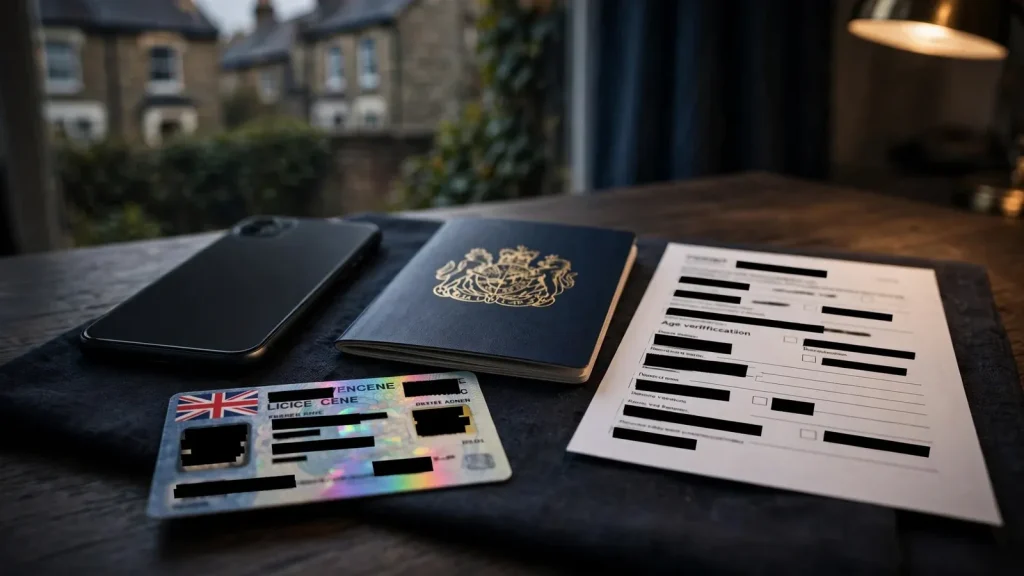
A short registration may avoid an immediate document upload, but it does not remove a licensed casino’s duty to verify identity and age.
Can a UK Casino Really Let You Play Without ID?
The phrase “no ID” sounds simple, but it can mean two quite different things. Someone might mean that registration does not begin with a request to upload a photograph of a passport or driving licence. Someone else might mean that a casino will never check who they are. Those are not the same promise, and in the UK the second one should make you pause.
A UKGC-licensed casino has to verify its customers’ identity and age. A short sign-up, if an operator offers one, does not cancel that duty. It describes the first step, not the whole relationship between you and the casino. You might be able to create an account without immediately sending a document, but that alone cannot establish that you will never be asked to confirm your details.
That is the central point behind searches for an online casino without ID in the UK: often, the person wants fewer hurdles at the start. Fair enough. Nobody enjoys filling in forms for the sake of it. But “no upload at sign-up” is a claim about convenience; “no identity checks at any point” is a claim about compliance. A licensed operator cannot simply promise the latter.
What a licensed casino has to do
To legally offer gambling services to UK players, an operator must hold a separate UK Gambling Commission licence. Its licence obligations include standards on fairness, anti-money laundering and responsible gambling. Customer checks sit within that regulated framework; they are not an optional extra that a casino can waive because a player would rather skip them.
Age matters too. Gambling online is for adults aged 18 and over, and operators must verify a customer’s age before allowing them to deposit funds into a gambling account. A site cannot treat a ticked box or a quick account form as a permanent substitute for checking that a customer is eligible to gamble.
So, when you see “casino without ID UK” in a headline, read it narrowly until you know what it actually means. It may be describing a sign-up that does not ask for documents straight away. It cannot, for a UKGC-licensed casino, reliably mean that the operator has no responsibility to establish who you are and how old you are.

A useful distinction is between *not being asked for a document immediately* and *not being verified*. The first may describe the order or format of the initial steps. The second suggests that identity checks will not happen at all. If a site makes that broader promise while presenting itself as a legal option for UK players, the wording deserves scrutiny.
“No photo ID” is not the same as “no checks”
People also look for a casino without photo ID because they may not have a particular document to hand, or simply do not want to send one. But “photo ID” is only one way people describe identity evidence; it does not change the operator’s obligation to verify its customers. Nor does the absence of an immediate document request prove that an account has passed every check that may be required.
I would not assume that a smooth registration means the casino has no further questions. The account can feel ready to use while the operator’s verification responsibilities remain. If checks are required, a promise that they will never arise is not a sound basis for choosing a site. The practical details of when a request may appear, and what documents might be involved, are a separate matter.
The same caution applies to phrases such as “no ID check” or “play without verification”. They can blur the difference between a brief first step and a lasting exemption. In regulated gambling, that distinction is important: the convenience of entering your details quickly does not override the rules the operator has to follow.
There is another point worth keeping clear. A site’s appearance or marketing language does not establish that it is licensed for the UK. A legal online casino serving UK players must hold a current UKGC licence. Check the UKGC public register to confirm the licence number before depositing. If the site does not prominently display its UKGC licence number in the footer, close the tab immediately. That is a much better test than trusting a slogan about easy access.
What the phrase can reasonably mean
In plain English, an online casino “without ID” might mean a casino where you are not asked to upload a document as the first thing you do. It should not be taken to mean that a UK-licensed operator will let you gamble indefinitely without establishing your identity and age.
That difference can save you from a familiar misunderstanding: seeing a simple start to registration and treating it as a guarantee about everything that follows. I’d keep the claim modest. No document request at the outset is not the same as no checks, and neither phrase should be confused with a licence exemption.
If you want fewer steps, look for a clear explanation of the operator’s process rather than a sweeping promise that verification never happens. The legal boundary is straightforward: a UKGC-licensed casino must meet its verification duties. A genuinely check-free promise does not fit that boundary.
The short version? Less paperwork at the start may be possible. No responsibility to verify is not.
When Verification Happens—and What You May Be Asked to Provide
A casino may let you fill in an account form before asking you to upload documents. That can make the first few minutes feel like an “online casino no ID needed” experience. It is only a difference in how the sign-up steps are presented, though, not a promise that you will never have to prove who you are.

For a UKGC-licensed operator, identity checks are part of serving customers in the UK. The operator must verify your age before allowing you to deposit, and all players must be 18 or older. So a registration page that accepts your details without an immediate document upload does not mean you are cleared to gamble without verification.
The check may not appear at the first click
There is no single moment when every casino asks for documents. You might be prompted during registration, or the operator may first check the details you provide and ask you to upload evidence if it still needs to confirm them. The precise sequence is down to the operator.
The practical point is that a short form and a completed identity check are not the same thing. If you can create an account without sending a file straight away, that tells you about the sign-up flow, not whether the operator has finished verifying you. You should expect the operator to require checks, even if the first screen does not mention an upload.
I’d treat any “no ID required” wording cautiously until I know what the operator means by it. Sometimes it describes a registration process with fewer steps at the start. It should not be read as saying that a UK-licensed casino can ignore its verification duties.
What you may be asked to send
The usual document requests involve photo ID and proof of address. The first helps establish who you are and your age; the second helps confirm your address. An operator will tell you what it accepts and how to submit it. Requirements can differ, so don’t assume that a document accepted by one site will necessarily be accepted by another.
Read the request carefully before sending anything. Check that the details on your account match the information on your documents, and follow the operator’s instructions for providing them. If a detail is wrong or a document is not accepted, ask the operator what needs correcting rather than sending unrelated paperwork.
A photo ID request does not necessarily mean that your account has been accused of anything. It is part of the checks a licensed operator must carry out. Likewise, being able to browse games or complete some account details does not prove that verification is complete. Those are separate steps.
Keep the stages distinct
It helps to think of the process in three parts: entering your details, the operator checking them, and providing documents if requested. They may happen close together, but they are not interchangeable. An account form is information you give; a document upload is evidence the operator may need to confirm that information.
This matters if you are searching for slots with no ID needed in the UK. You may find a site where no file is requested at the point you register. That does not establish that you can deposit or continue using the account without an age and identity check. Before depositing, make sure you understand whether the operator has completed its checks or still needs information from you.

If you are unsure, contact the operator through its own support channel and ask what is outstanding. Keep the answer and any instructions with your account records. Don’t rely on a banner or a quick sign-up screen to explain the whole process; it may only describe the first step.
The useful distinction is simple: no upload yet does not mean no verification. A UKGC-licensed casino must verify its customers, and it must establish that you are old enough before taking a deposit. Documents may be part of that process. Short sign-up, perhaps. Exemption, no.
How to Assess a Casino’s No-ID Claims
A phrase such as “no ID” can make a sign-up sound effortless, but it is not a useful promise on its own. I’d treat it as a claim to unpack: what exactly is being made easier, and what do the account rules say can happen later? “No document upload at registration” is a narrower statement than “you will never be asked to confirm who you are”. If the wording blurs those two, pause before depositing.
Start with the operator’s UK status, not the banner. A company serving customers in the UK must hold its own UKGC licence for that activity. Look for the UKGC licence number displayed prominently in the site footer, then check that number on the Commission’s public register. If the number is missing from the footer, close the tab. A polished design or a page full of reassuring language is no substitute for that check.
Do
- Verify the UKGC licence number on the public register
- Compare promotional wording with the full terms
- Distinguish a shorter sign-up from a promise of no checks
Don't
- Trust a polished design over a licence check
- Rely on a banner for the full account rules
- Assume a no-deposit bonus means no identity requirements
Read the claim literally
Watch for careful wording. “Quick registration”, “less paperwork” or “play while checks are pending” does not necessarily mean there will be no checks. Nor does a page that says “no photo ID” establish that the operator will never need to confirm your details by another route. The important question is what the statement actually covers, rather than the impression created by its headline.
Read the terms that apply to opening and using the account, and look for language about identity, age, account review and the operator’s right to request information. The point here is not to guess when a request might arrive; it is to see whether the headline leaves out a qualification that appears in the rules. If the marketing says one thing and the terms leave the operator room to do another, rely on the terms.
Also check whether the claim applies to every customer or only to a particular sign-up route, payment option or offer. A site may describe a smoother initial process without promising the same experience in every situation. If the conditions are scattered across several pages, or the meaning changes depending on which page you read, that is a reason to be cautious.

Treat “no deposit” as a separate offer claim
A no-deposit bonus is not proof that a casino has no identity requirements. It describes how a promotion is funded, not what the operator’s account rules are. Before accepting one, read the offer terms alongside the general account terms and check whether the promotion is available to you, what you must do to qualify, and what restrictions apply to any resulting winnings.
Pay particular attention to wagering requirements, expiry wording, eligible games and withdrawal conditions. A bonus balance is not automatically withdrawable cash, even when the headline makes the offer sound immediate. If the terms are hard to find, incomplete, or written in a way that leaves a key condition unclear, I would not accept the offer until I could understand it.
The same applies to offers described as “free” or “no deposit required”. Those words tell you something about the entry condition, but not necessarily about limits on use or the status of winnings. Read the offer itself, rather than assuming that a short promotional line contains the full deal. A generous-sounding headline can still come with rules that make it a poor fit.
Notice what the page avoids saying
A credible explanation should make the limits of its claim clear. Be wary of absolute language such as “no checks ever” when the terms elsewhere reserve the operator’s right to review an account or request information. That contradiction matters more than a friendly badge or a chat reply that simply repeats the headline.
I’d also check whether the page clearly identifies the company responsible for the site and gives you a route to its full terms and complaints information. If you cannot tell who is operating the casino, or cannot find the rules that govern the offer, do not treat a low-friction sign-up as evidence of trustworthiness.
Keep the decision simple: verify the UKGC licence number, compare the promotional wording with the full terms, and distinguish a shorter sign-up from a promise of no checks. If any of those points cannot be confirmed, walk away. That is the useful test.
What “Best” Means When You Want Fewer Sign-Up Hurdles
If you’re looking for an online casino in the UK without ID, check each operator’s verification requirements before signing up; the information here only confirms payout speed. Use the listed timeframe as one detail to consider.
-
WinBeast
- Payout speed
- 1-3 business days
WinBeast lists a payout speed of 1–3 business days. You can use that as a reference when considering withdrawals.
-
Chanze
- Payout speed
- 1-3 business days
Chanze lists a payout speed of 1–3 business days. You can factor this timeframe into your withdrawal expectations.
-
Zombillion
- Payout speed
- 1-3 business days
Zombillion lists a payout speed of 1–3 business days. This gives you a stated timeframe to consider for payouts.
-
EvoSpin
- Payout speed
- 1-3 business days
EvoSpin lists a payout speed of 1–3 business days. You can keep this stated timeframe in mind when reviewing the operator.
-
Dieselwin
- Payout speed
- 1-3 business days
Dieselwin lists a payout speed of 1–3 business days. You can use this information when considering how quickly withdrawals may be paid.
-
SlotoSport
- Payout speed
- 1-3 business days
SlotoSport lists a payout speed of 1–3 business days. This is the available detail to guide your payout expectations.
-
NightWin
- Payout speed
- 1-3 business days
NightWin lists a payout speed of 1–3 business days. You can consider this timeframe when assessing its withdrawal information.
-
SpinFormula
- Payout speed
- 1-3 business days
SpinFormula lists a payout speed of 1–3 business days. You can refer to this stated timeframe when considering payouts.
-
Revery Play
- Payout speed
- 1-3 business days
Revery Play lists a payout speed of 1–3 business days. You can use that as a reference for its stated payout timing.
-
Britsino
- Payout speed
- 1-3 business days
Britsino lists a payout speed of 1–3 business days. You can keep this stated timeframe in mind when reviewing payout details.
If you want fewer steps before you can get started, “best” should mean straightforward to use without asking you to compromise on the basics. A short registration form may feel easier, but it is only one part of the decision. I would weigh it against the operator’s UKGC status, whether its payment options suit you, and whether its terms are clear enough to understand before you commit.
Start with the licence, not the sign-up screen. A casino serving players in Great Britain must hold a UKGC licence. Look for its UKGC licence number in the footer; if it is not displayed prominently, close the tab. Before depositing, check the number on the UK Gambling Commission’s public register. That takes a little effort, but it is a much better test than a polished page promising a frictionless account.
Next, ask what “easy to use” means for you. Does the site explain its registration steps clearly? Can you find the account and payment information without hunting through menus? Are the terms readable, rather than tucked away behind vague promotional language? These details matter more than a headline suggesting that a casino has no sign-up hurdles. The smoothest start is not much use if you cannot work out what you agreed to.

Payment suitability is personal, so check the methods available before opening an account. Credit card gambling has been banned in Great Britain since April 2020, which means you need a debit card or another permitted payment method. Do not assume that a method you use elsewhere will be accepted here, or that a site’s payment options make it more trustworthy. Keep the practical question simple: can you use an allowed method, and are the relevant terms clear?
Then read the conditions attached to the offer or account feature you are considering. Look for what you must do to qualify, what restrictions apply, and what could affect access to funds. If the wording is unclear, pause and ask the operator before depositing. “No deposit” in a promotion’s headline does not tell you, by itself, what conditions apply to the reward.
A useful comparison is not a hunt for the casino making the boldest promise. It is a check of whether the site is properly licensed, usable for your needs, and transparent about what happens after registration. Convenience is a bonus; it is not a substitute for those checks.
I would also be wary of treating “best no ID casino” as a meaningful quality label. It says little about whether the operator is suitable, and it can make a quick sign-up sound more important than the rules that protect your account. If you are comparing sites, set your own priorities first: clear terms, an appropriate payment option, and a verifiable UKGC licence. Fewer hurdles are only worthwhile when the essentials are still in place.
That is the trade-off. Choose clarity over a promise of effort-free play.
Choosing a Casino
-
1
Check the Licence
Look for the UKGC licence number in the footer and verify it on the Gambling Commission's public register.
-
2
Assess Usability
Ensure registration steps are clear and account/payment information is easy to find without hunting through menus.
-
3
Verify Payments
Check that available payment methods are permitted, such as debit cards, since credit card gambling is banned.
-
4
Review Terms
Read the full conditions for any offers to understand qualifying deposits, wagering requirements, and cash-out limits.
Can You Play Casino Games Without Verification?
You may be able to open a game before anyone asks you to upload a document. That can make it look as though the casino has no identity checks. It does not. A UK-licensed operator still has to verify its customers, and a pause-free start is not permission to skip those duties.
The distinction is between when a check appears and whether it applies. A casino might confirm some details electronically during registration, so you do not see an immediate document request. Another account may be asked for evidence before it can proceed. Either way, game access by itself tells you very little about what has been checked or what may still be required.
That applies across formats. A live casino table does not get different identity rules just because a dealer is on screen. The same goes for slots or bingo: the type of game does not make an account exempt. If a site implies that a particular game can be played for real money without the operator having to verify you, treat that as a warning, not a perk.
Bingo makes a useful comparison because its formats have different rules of play, but none changes the account requirements. In 90-ball bingo, a ticket has three rows and nine columns; prizes can be awarded for completing one line, two lines or the full house. In 80-ball bingo, players mark patterns on a coloured grid, such as four corners, a letter shape or the whole card. With 75-ball bingo, the ticket is a square and a win comes from completing a pattern such as a cross, an X, a diamond, a letter T or a picture frame.

Those are differences in how you play and win, not in how a casino checks who you are. A game may load quickly, and you may be able to look around before a document request appears. Do not read that as a promise that the request will never come. The operator’s obligations follow the account and the real-money service, not the bingo format or whether you are facing a live dealer.
For a site serving UK players, check that it holds a separate UK Gambling Commission licence. That is the relevant framework for legal online gambling here; an attractive game lobby cannot substitute for it. Keep the simple test in mind: access to a game is not proof that verification is finished. Small distinction, important one.
What a “No ID Casino” Means for UK Players
When you see a casino described as “no ID”, read it as a claim about how the first steps may feel, not as a promise that the operator will never establish who you are. A site might make registration seem brief or avoid asking you to send documents straight away. That does not turn identity checks into an optional extra.
For a casino to legally offer services to players in the UK, it must hold a separate UKGC licence. That licence comes with standards covering fairness, anti-money laundering and responsible gambling. Identity checks sit within that regulated relationship: a licensed operator needs to verify its customers. So “no ID” cannot honestly mean “no identity verification, ever” at a UKGC-licensed casino.
That is the useful distinction. A smoother start may save you from dealing with a document request immediately; it does not remove the operator’s duty to check its customers. If a site presents itself as a no-ID option, I would treat the wording as shorthand for a possible sign-up experience, not a special kind of UK casino with different rules. The label is not a licence category.
There is another point worth keeping straight: a familiar-looking site or a reassuring badge is not the same thing as proof that it is authorised for the British market. Look for its UKGC licence number in the footer, then check that number on the Gambling Commission’s public register before depositing. If the number is not prominently displayed, close the tab. A quick check is less hassle than finding out later that the site was not operating under the protections you expected.
In everyday terms, “no ID casino” may describe a low-friction first impression. It cannot be a reliable promise that a UK player will never be asked to verify their identity. If you are choosing a casino, judge the operator by its actual UKGC status and the way it explains its checks, rather than by the neatness of a slogan.
I would also be wary of treating “no ID” as a reason to overlook the rest of the account. A UKGC licence is the baseline for a legal casino serving UK players, not a guarantee that every part of the experience will suit you. Read the site’s own information, make sure you understand what you are agreeing to, and do not deposit on the assumption that verification can simply be avoided.

The plain-English answer is simple: a UK casino may make its opening steps feel easier, but a licensed operator still has to verify its customers. The phrase describes convenience, at most. It does not describe an exemption.
Crypto, Real-Money Play and the Same Verification Rules
Paying with cryptocurrency does not turn a real-money casino account into an anonymous one. The important point is who is offering the gambling service, not whether you use a bank transfer, an e-wallet or a digital currency. An operator offering services to UK players needs a separate UKGC licence, and that licensing framework still applies when customers use crypto.
So a crypto casino promising that no identity checks will ever be needed is not offering a special UK exemption. If it is serving the British market legally, it must meet the same requirements as other licensed operators. A payment method cannot remove those duties. Nor does choosing a different game: slots, table games and bingo do not become exempt simply because they are funded in a particular way.
This matters when you see claims about casino games with no ID required in the UK. Sometimes the claim means only that the first steps appear simple; sometimes it is attached to a site operating outside the UKGC system. Those are not the same thing. For real-money play, check that the operator has a current UKGC licence number and verify it on the Commission’s public register before depositing. If the licence number is not prominently displayed in the footer, close the tab.
Bingo gives a useful sense of how little the game itself tells you about checks. Ticket prices can start at 1p in low-stakes rooms and reach £1 or more in premium games. A specialist review described one 1p ticket game with a £10 full-house prize, and a £1 game with a jackpot in the hundreds or thousands. Treat those as examples from that review, not a promise about what a room will pay today. Whether the ticket is cheap or the prize is large, the operator’s UK licensing obligations do not change.
I would not treat “crypto” or “no ID” as a shortcut label for a safer or more private route. Look at the licence, the real-money terms and what the operator actually says about account checks. The currency changes; the rules do not.
Why “No Verification” Is Not a Reliable Promise
A promise of play with no verification can sound like a shortcut, but it should not be treated as a reliable description of a UK gambling account. A site serving UK players needs a separate UKGC licence, and a licensed operator has obligations that do not disappear because its sign-up feels simple. Less friction at the start is not the same as fewer safeguards.
I look at the account controls as well as the claims on the landing page. Remote operators must prompt new customers to set a financial limit before their first deposit and make account-level limit controls accessible. Check whether you can find those controls and understand what they apply to before putting money in. A limit is useful only if it is clear and practical to use.

Self-exclusion matters too. UKGC-licensed casinos must provide this tool, so a site’s approach to safer gambling should be visible rather than buried beneath a bold “no checks” headline. If a site makes it difficult to find basic account protections, that tells you something about the experience you may be signing up for. Not reassuring.
There is also a simple licensing check. A gambling site should prominently show its UKGC licence number in the footer. If it does not, close the tab immediately. If it does, verify the number on the UK Gambling Commission’s public register before depositing. A badge or a confident claim is not a substitute for checking the register.
A UKGC-licensed operator must also offer an internal complaints process and access to an approved Alternative Dispute Resolution service. Those routes matter if you have a dispute; they are part of the protections tied to regulated play, not optional extras advertised at a site’s discretion. You should be able to find information about them without having to guess where the operator has tucked it away.
So, when you see “no verification” attached to a casino, read it as a claim about convenience, not as proof that checks or safeguards can be avoided. The more useful question is whether the site is properly licensed and whether its protections are clear and accessible. Convenience has a boundary. UK rules set it.
- Verify the UKGC licence number in the footer via the public register
- Set a financial limit before making the first deposit
- Locate the self-exclusion tool in the account settings
- Identify the internal complaints process and ADR service
Can You Withdraw Winnings Without Showing ID?
A withdrawal request does not switch off identity checks. If a UKGC-licensed casino still needs to verify your account, it may ask you to complete that check before releasing your balance. Having been able to play or deposit earlier does not mean a cash-out will be approved without further review.
Keep two things separate: verification and payment processing. Verification is the operator confirming who holds the account; payment processing is what happens after the operator approves and releases the funds. A delay at the first stage is not evidence that the payment method itself is slow, and a quick payment method cannot remove a check.
A specialist review reports that e-wallet withdrawals can process within 24 hours after the operator releases the funds. Treat that as a report about processing after release, not a promise that your money will arrive within that time of requesting it. The operator’s checks, its payment handling and the e-wallet provider’s own processing are separate steps.
If your withdrawal is pending, read the account message and contact the casino through its official support channel if the reason is unclear. Do not open another account or try to route the payment differently to get around a check; that can complicate matters rather than resolve them. Keep any withdrawal confirmation and support replies until the funds arrive.
Before depositing, check that the casino displays its UKGC licence number in the footer and verify it on the UKGC public register. A site’s claim of “no ID withdrawals” does not override the checks a licensed operator must carry out. There is no reliable way to infer from the withdrawal button alone whether your account is ready for payment.
The short version: “no ID withdrawal” may describe a payment that proceeds without a new document request in that particular case. It is not a guarantee that checks will never be required. Payment speed and identity approval are different questions.

Free Spins and Bonuses: Check the Terms Before You Play
A free-spin headline is not the same as cash ready to withdraw. Check which game the spins apply to, whether any winnings are added as bonus funds, and what conditions must be met before those winnings become withdrawable. The offer’s own terms matter more than the banner.
The same goes for bingo tickets offered as a promotion. They may be limited to particular rooms or ball formats, so a free ticket may not work in the game you intended to play. One specialist review has described tickets that expired after 24 hours; treat that as an example, not a rule for every offer, and check the expiry shown by the operator.
Winnings from a free ticket may also carry a wagering requirement. A specialist review has reported requirements in the range of 20x to 65x for such winnings, but terms vary between offers. Find out what amount the requirement applies to, which games count towards it, and whether the bonus itself or only the winnings are restricted. A headline prize can look rather different once those details are clear.
Before accepting a promotion, read the terms for the qualifying deposit, eligible games, expiry, wagering requirement and any maximum cash-out condition. If the wording is unclear, ask the operator before opting in; accepting first and untangling the rules later is the less useful order.
For anyone looking for free spins at a no-ID casino in the UK, keep the two issues separate: a promotion’s terms govern how its reward can be used, while a “no ID” label does not make the reward unrestricted. Compare the actual offer details, not just the amount or number of spins in the headline. If the terms do not explain when winnings become withdrawable, do not assume the bonus is cash. Check before you play.
Are online bingo winnings taxable in the UK?
No, recreational players in the UK do not pay tax on online bingo winnings.
How do I know if an online bingo site is safe?
Check that the operator holds a current UK Gambling Commission licence by looking it up on the UKGC public register before depositing.
What is a wagering requirement?
It is the amount you must wager before you can withdraw a bonus. For example, a £40 bonus with a 4x requirement means spending £160 on eligible bingo tickets.
How long do online casino withdrawals take in the UK?
E-wallet withdrawals typically process within 24 hours after the operator releases the funds.
Casino Games in the UK: Slots, Live Play and More
Content created by the «luxurytrump» team