
Understand the edge before your first spin
 Available in US
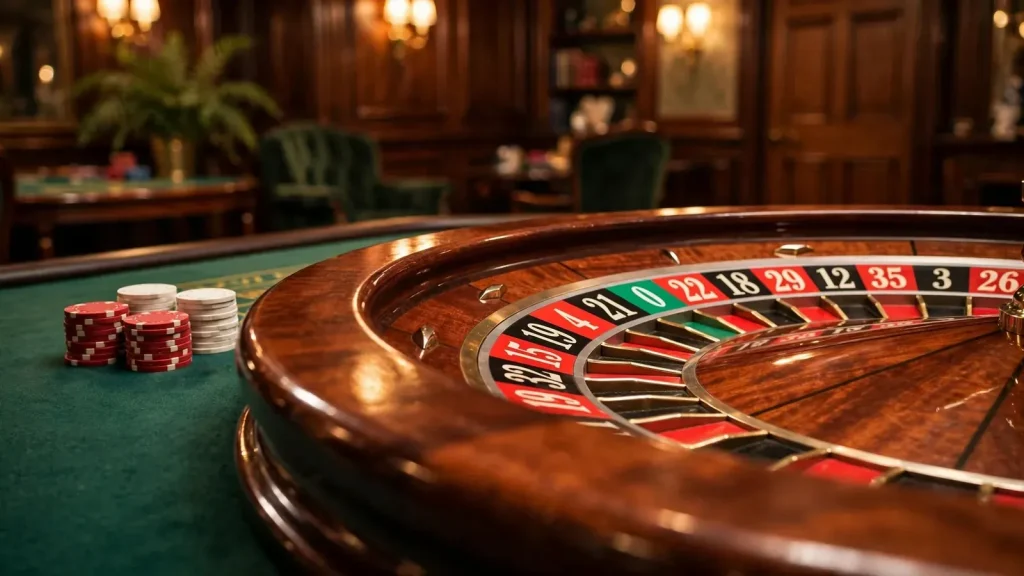
A practical guide to the single-zero wheel, bet types, roulette formats and the limits of betting systems.
The European Wheel: One Zero, One Clear Edge
A European roulette wheel has 37 pockets: the numbers from 1 to 36, plus a single zero. That green pocket is easy to overlook when you first sit down, because the numbered pockets and the betting layout take up most of your attention. It is the detail that gives the game its basic mathematical shape, though. The zero is part of the outcome, and the payouts are set with it in mind.
I think of the wheel as the starting point for judging any European roulette game online. Before the graphics, dealer or table rules come into it, there is the same central question: how does the number of possible outcomes relate to the payouts? On a standard European wheel, the answer is expressed as a house edge of 2.70%. That figure is the baseline for this version of roulette.
The house edge is not a prediction about what will happen in one session. It is a way of describing the casino’s mathematical advantage across play over time, under the rules of the game. A short run can go either way; the figure does not tell you what the next ball will do, or what your own results must look like. It describes the structure, not a promise about an individual visit.
When choosing a UK casino for European roulette, payout timing is one practical detail to check. Use this list to see the stated withdrawal timeframe for each operator.
-
WinBeast
- Payout speed
- 1-3 business days
WinBeast lists a payout timeframe of 1–3 business days, giving you a stated window to consider when planning withdrawals.
-
Chanze
- Payout speed
- 1-3 business days
Chanze lists payouts as taking 1–3 business days. You can use that timeframe as one practical detail when considering the operator.
-
Zombillion
- Payout speed
- 1-3 business days
Zombillion gives a payout timeframe of 1–3 business days, so you have a stated estimate for withdrawals to factor into your choice.
-
EvoSpin
- Payout speed
- 1-3 business days
EvoSpin lists a payout speed of 1–3 business days. Keep this stated withdrawal window in mind as you assess your options.
-
Dieselwin
- Payout speed
- 1-3 business days
Dieselwin states that payouts take 1–3 business days, offering you a clear timeframe to consider for withdrawals.
-
SlotoSport
- Payout speed
- 1-3 business days
SlotoSport lists payouts at 1–3 business days. This gives you a stated estimate to bear in mind when choosing where to play.
-
NightWin
- Payout speed
- 1-3 business days
NightWin gives a payout timeframe of 1–3 business days, a useful practical detail for you to consider alongside your other preferences.
-
SpinFormula
- Payout speed
- 1-3 business days
SpinFormula lists a payout speed of 1–3 business days. You can factor this stated withdrawal timeframe into your decision.
-
Revery Play
- Payout speed
- 1-3 business days
Revery Play states a payout timeframe of 1–3 business days, giving you an estimate to consider when planning withdrawals.
-
Britsino
- Payout speed
- 1-3 business days
Britsino lists payouts as taking 1–3 business days. You have this stated timeframe to consider when evaluating the operator.
That distinction matters when you look at a European roulette casino online. A polished table can make the experience feel different, but the wheel’s basic mathematics does not become more favourable because the interface is attractive or the spin is delivered in a different format. If the game uses a standard European wheel, the single zero is still there, and the baseline house edge remains 2.70%.
The layout also helps explain why the zero matters without needing to memorise every bet straight away. Some bets cover a single outcome; others cover a group of outcomes. The ball can land in any pocket, including zero, so a bet that appears to cover a broad part of the numbered layout is not a bet on every pocket. The green pocket sits outside the red-and-black pattern and outside the ordinary run of numbered outcomes. It is not decorative trim. It changes the arithmetic.
That is the useful first check when browsing European roulette casinos in the UK: look at the wheel, not just the game name. “European roulette” points to a particular wheel structure, but the display should make that structure clear. You want to see a single zero rather than assume that every roulette title with a familiar table design uses the same version. The name gives you a starting point; the pockets confirm what is on screen.
In online play, the wheel may be shown as a graphic or as part of a streamed table. Either way, the underlying distinction is simple: European roulette has one green zero among its 37 pockets. The betting area may change its look from one game to another, and the pace of play may differ, but neither detail replaces the need to understand what the wheel itself contains.

The 2.70% edge is useful precisely because it gives you a stable reference rather than a sales pitch. It lets you compare the standard European wheel with the rules of a particular table without confusing presentation with probability. If a game adds a special feature or changes how a specific bet pays, that is a rule to inspect separately; it does not make the standard wheel’s baseline disappear. Read the table’s terms alongside the wheel.
For a newcomer, there is no need to make the maths grander than it is. One zero. Thirty-six numbered pockets. A defined house edge. Those are enough to orient yourself before you consider where to place a chip or which version of the game suits you. The important habit is not to treat the green pocket as an afterthought simply because it is only one space on the wheel. In roulette, one space counts.
When I compare European roulette casinos, I start here because it stops the conversation drifting toward themes and table effects before the core game is clear. The same wheel can be dressed up in a quiet digital layout or presented with a dealer and a physical ball. The surface may feel different; the single-zero structure is the part to check first. It is the clean reference point for understanding European roulette, whether you are looking at a table on a phone or a larger screen.
There is no need to infer a winning pattern from the wheel’s appearance. The pockets define the available outcomes, while the edge describes the casino’s advantage built into the rules. Keep those two ideas separate and the game is easier to read: the wheel tells you what can happen, and the house edge tells you how the standard European version is balanced over time.
Before You Play for Real Money
When you’re comparing places to play European roulette, a polished homepage and a familiar-looking table tell you very little about whether the casino is suitable. I’d start with the operator’s UK Gambling Commission licence, then check how clearly it explains the game and the account controls you’ll be expected to use. A shortlist is more useful than a supposed “best” casino: what works for one player may not suit another.
The UK Gambling Commission, or UKGC, is the regulator for online casino activity in Great Britain. A casino serving British customers for real-money play must hold the relevant operating licence. Don’t rely on a logo in the footer alone. Find the operator’s legal name and licence details, then check that the licence is current on the UKGC’s public register before depositing. If the details are absent, don’t match, or are difficult to verify, move on.
That check is less glamorous than browsing table designs. It matters more.
Next, look for RTP information. RTP is the published return-to-player figure for a game: it describes a theoretical return over extended play, not a promise about what you’ll get back in a session. You should be able to find the information for the roulette game you intend to use, either in its rules or in the game information panel. If it is buried, unclear or missing, ask customer support where it is before you play. A casino that makes the rules and game information easy to find is easier to assess than one that leaves you guessing.

This is not a shortcut to picking a “best European roulette casino”. RTP alone does not tell you whether the site’s terms are clear, whether you can set useful limits, or whether its service suits you. I’d treat accessible information as a basic check, not a recommendation.
Pay attention to account setup, too. Operators must verify your age before allowing you to deposit into a gambling account. Online gambling is legal in the UK for people aged 18 and over when the operator holds a UKGC licence. Verification is part of opening an account, not an optional extra to deal with later. Use accurate details, and expect the operator to check them.
There should also be a prompt to set a financial limit before your first deposit, with account-level controls available so you can review or change your limits. UKGC-licensed live casino operators must offer deposit limits, loss limits, session time reminders, reality checks and cool-off periods, as well as GamStop self-exclusion. These tools are worth finding before you need them. Check where the controls sit in the account menu and what each one does; a button you cannot locate is not much help.
Payment rules are another quick test of whether you understand the account you’re opening. UKGC licensees cannot accept credit cards for gambling, including credit-card funding routed through a money service business. They also cannot accept wallet payments where the wallet allows credit-card funds to be used for gambling. Read the payment terms rather than assuming every displayed method can be used in every way.
Before you commit, find the complaints procedure. UKGC licensees must provide an internal process and access to an approved Alternative Dispute Resolution service if a dispute is not resolved. The operator must also contribute to the Research, Education and Treatment levy. You do not need to study the whole regulatory framework, but clear policies on complaints, limits and account checks are sensible signs that the basics are being handled openly.
I would not choose a casino just because it has a large table selection or a dramatic welcome page. Check the licence on the register, locate the roulette RTP and rules, and test whether the limits and support information are easy to find. If those essentials are hard to establish before you deposit, there is little reason to press ahead.
How to Play: Bets, Payouts and the First Spin
When you play European roulette online, the basic sequence is simple: choose a stake, select a bet on the table, wait for betting to close, then see where the ball lands. The screen may look busier than a physical layout, but you only need to place your chip on the option you mean to choose. Before confirming, check that the highlighted bet and stake match your intention. A stray click is a poor way to begin.

You can start with one bet or combine several. The total amount committed is the sum of the chips on the layout, so keep an eye on that figure if you add bets one at a time. Once the round begins, you cannot change those selections for that spin. After the result appears, the game settles winning bets and clears or retains the layout according to its controls; check the table before starting another round rather than assuming your previous choices have disappeared.
Picking a number or an outside bet
A straight-up bet means choosing one number. Place the chip directly on that number, and it wins only if the ball finishes in the selected pocket. On European roulette, a winning straight-up bet pays 35:1. In practical terms, the payout is thirty-five units of winnings for each unit staked, with the original stake returned as well. It is a narrow target, so the large payout should not be mistaken for a likely result.
Outside bets cover broader groups and are easier to spot around the edge of the numbered layout. Red or black selects a colour; even or odd selects number parity; high or low selects one of the two broad ranges shown on the table. Each pays 1:1 when it wins: your winnings match the stake, and the stake is returned. These choices cover more numbers than a single-number bet, but the return per winning bet is smaller.
That gives you a straightforward first decision. A number bet is precise and pays more; an outside bet spreads the selection across a larger group and pays even money. Neither changes what the ball can do. I tend to decide what I want to bet before moving chips around, because a tidy plan is easier to follow than a layout built in a hurry.

A calm first round
If you are learning how to play European roulette, begin by using the interface at a pace that lets you read it. Find the bet label, place a single chip, then check the stake and selection before the spin starts. You can practise the same sequence in a free-play version if one is offered, without treating its play balance as real cash or assuming every table uses identical controls.
A European VIP roulette table follows the same basic bet logic: the label describes the choice, and the payout depends on the bet and result. The VIP label does not alter the meaning of red, black or a straight-up number. Read the table’s displayed rules before you join, especially if its controls differ from the version you have used before. For your first real round, one clear bet is plenty. No need to make a ceremony of it.
Reading the Table: Inside Bets and Their Payouts
The numbered grid is where the inside bets sit. On a European roulette table, the numbers run in three vertical columns, with the lowest numbers nearest the dealer and the higher ones farther up the layout. The felt can look busy at first, but the useful detail is simple: the lines between numbers are betting positions too.
A split bet covers two neighbouring numbers. Find the shared border between the pair and place the chip across that line. The numbers may be side by side in the same row, or one above the other in the same column. Either way, the bet wins if the ball lands on either number. A split pays 17:1.

That placement is easy to misread on a screen. If the chip sits fully inside one number’s box, it is a straight-up bet, not a split. On a live table, the dealer can confirm the position before the betting window closes; on a digital layout, the highlighted numbers are a useful check. I take a second to look at them. Cheaper than guessing.
A street bet covers a horizontal row of three numbers. On the standard European roulette table layout, each row is visibly grouped across the three columns. Place the chip on the outer edge of that row, rather than on one of its internal dividing lines. The bet then covers all three numbers in the row and pays 11:1.
The distinction comes down to the shape under the chip: a split straddles one border and covers two numbers; a street sits at the end of a row and covers three. If the interface displays a bet summary, check that it names the intended combination before confirming. A chip nudged onto the wrong line can change the bet, even when the difference on screen looks tiny.
These are inside bets, so their payouts are higher than those of broad outside selections, but they also cover fewer outcomes. That is the trade-off, not a trick in the layout. A roulette strategy cannot make a particular number or row more likely to appear; learning the markings simply helps you make the bet you intended.
When I’m looking at an unfamiliar European roulette casino table, I trace the relevant line with my eyes before putting a chip down. It takes little time and avoids the classic muddle between a number, a pair and a row. Read the grid first; the payout label makes more sense once you know exactly which numbers the chip covers.
Split Bet
Covers two neighbouring numbers. Pays 17:1.
Street Bet
Covers a horizontal row of three numbers. Pays 11:1.
Straight-up Bet
Covers a single number. Pays 35:1.
Single-Zero Bets, La Partage and the Limits of a System
On a European single-zero wheel, the green pocket is the awkward exception for even-money bets. Red or black, odd or even, and high or low may look like straightforward choices, but zero belongs to none of those groups. Without a special rule, a ball landing there means an even-money bet loses. That is where La Partage changes the calculation.
When La Partage applies, half of an even-money stake is returned if the ball lands on zero. It does not make the bet certain, and it does not remove the house advantage. It lowers the house edge on those bets to 1.35%, compared with the standard European roulette edge of 2.70%. The reduction applies to even-money bets, not every option on the table. Check the rules shown for the specific game; a single-zero wheel alone does not tell you whether La Partage is in force.
That distinction is easy to miss when you are scanning a table quickly. I would check the rules panel before placing a stake, especially if you are choosing between tables that look much the same. The layout tells you where the bets go; the table rules tell you what happens when the ball lands on zero. Small detail, real difference.
The better edge can make La Partage worth noticing, but it is not a system for turning roulette into a predictable income. Every spin is governed by chance. Previous results do not tell you where the next ball will land, and no staking pattern can predict the outcome.

The Martingale is the familiar example: after each loss, double the next bet, aiming to recover earlier losses when a win eventually arrives. The arithmetic sounds neat until the losing sequence continues. Each step demands a larger stake, and a run of losses can put serious pressure on your bankroll. A table’s maximum stake or the money you have set aside can also stop the sequence before a win arrives. A system cannot make those constraints disappear.
There is another catch: increasing the amount you stake does not improve the odds of the next spin. It changes how much you stand to lose or win, not the chance of the result. A winning run may feel like confirmation that a method is working; it is still just a run of results, not evidence that the next spin is due to go your way.
I’d treat any staking plan as a way to organise your bets, not as protection from variance. Decide what you can afford to lose before you start, and do not raise stakes to chase a loss. If a pattern requires you to keep doubling, it is the pattern that needs questioning—not the wheel.
La Partage is a useful rule because it reduces the cost of zero for eligible even-money bets. It does not change roulette’s basic uncertainty. Better terms, not a forecast.
RNG, Auto-Roulette or a Live Wheel?
The wheel may be the same European layout, but the way a casino delivers each spin changes the feel of a session. With RNG roulette, software uses a random number generator to simulate the result. A live table instead streams a physical wheel, a dealer and the ball’s drop from a studio. Auto-roulette sits between the two: a real wheel runs automatically, without a dealer guiding each round on camera.
Do
- Choose RNG for fast pace and low stakes
- Choose live tables for a realistic dealer experience
- Use auto-roulette for a physical wheel without a host
Don't
- Expect the same pace across all live formats
- Assume minimum stakes are identical for every table
- Confuse the delivery format with the game's odds
I’d choose by pace first. RNG games move quickly because there is no filmed wheel sequence to watch, and their minimum stakes can be low, sometimes starting at 10p. That suits a short session where you want to place bets and see results without waiting for a studio feed. The trade-off is that you are watching a simulated spin rather than a ball travelling around a physical wheel.
With a live table, the wheel and ball are visible, and a human dealer runs the game. Each round has a more deliberate rhythm: the dealer sets the spin in motion, the ball lands, and the result is shown before the next betting period. A live table can feel more like sitting at a casino table, but that extra ceremony means fewer spins in a given stretch of time.
Auto-roulette keeps the physical wheel but removes the dealer-led presentation. You can still watch the ball land, while the rounds tend to move along without the same pauses for a host. Speed roulette is a quicker live format. A specialist review reports that it can exceed 150 spins per hour, compared with 80–100 at a standard live table. Treat those figures as format-specific guidance, not a promise about every table: the actual pace depends on the game.
Minimum stakes also vary by format and table. A specialist review reports UK live roulette minimums starting at 10p, while auto-roulette and speed tables sometimes begin at 5p. Those are starting points, not fixed prices across every casino. Check the table information before joining; the lowest stake can differ even when two games use a similar European roulette wheel.

For me, the useful distinction is not simply “live is better” or “RNG is faster”. If you want a quick run of spins and a low entry stake, RNG may fit. If seeing a real ball drop matters more, choose a streamed table and accept its slower rhythm. Auto-roulette offers a physical wheel with less dealer presentation, while speed roulette is there for people who want live play to move at a brisker clip.
Whichever format you pick, the result remains a roulette result, not something you can read from the wheel’s appearance or the previous spin. The delivery changes; the role of chance does not. My practical rule is simple: choose the pace you can comfortably follow, then check the minimum before you sit down. No need to rush.
Free Play or Real Money: Know Which Rules Apply
A free European roulette demo lets you try the table without staking cash. It is useful for learning where bets go and watching how a spin works, but it is not the same as playing for real money: demo results do not pay out, and they tell you nothing about what a future cash session will bring. Check the game’s mode before you start. The play-money balance should be clearly separate from your casino account balance.
For real-money European roulette, the legal line is straightforward. The UK Gambling Commission regulates online casino gambling in Great Britain, and a platform without a valid UKGC licence cannot legally offer British residents real-money live roulette. Being able to open a webpage is not proof that the operator is authorised to serve you. I would check the operator’s licence on the Commission’s public register before depositing, not rely on a logo or a claim on the site.
Age checks are part of the process, not an optional extra. A UKGC licensee must verify your age before it lets you deposit into a gambling account; online gambling is for adults aged 18 and over. Expect to provide information that allows the operator to confirm who you are. If the details do not match, access to deposits may be delayed while checks are completed.
A licensed operator must also prompt new customers to set a financial limit before their first deposit and make account-level limit controls accessible. Take that step while you are deciding whether to play, rather than after a session has begun. For live casino play, UKGC licensees must offer deposit and loss limits, session reminders, reality checks, cool-off periods and GamStop self-exclusion. Those tools are there to help you keep control of the account; they do not make roulette predictable.
Payment rules matter too. UK remote gambling operators cannot accept credit cards for gambling, including credit-card funds routed through a money service business. They also cannot accept a wallet payment if that wallet lets you use credit-card funds for gambling. If a payment option is declined, do not try to route the same credit through another service.
Free play is a low-stakes way to get familiar with the interface; it is not a rehearsal that guarantees the same experience with money involved. Before switching modes, check that you are on the licensed operator’s real-money table, understand the account controls, and know which payment method you are using. A small pause here beats sorting it out mid-session.

Roulette-Themed Slots Are a Different Game
A title can include “roulette” without offering a roulette wheel. A European roulette slot is still a slot: you start a spin on a game screen, rather than placing a bet on numbered pockets and waiting for a ball to land. The theme may borrow the wheel, colours or familiar roulette language, but that does not make its outcomes follow European roulette odds.
That distinction matters when you are comparing games. On a wheel-based European table, the result comes from the ball landing in one of the wheel’s pockets. A slot spin is a separate game outcome. Its title or artwork cannot tell you the rules, payout structure or chances of a particular result. Check the game information itself rather than assuming that “roulette” in the name means the table game.
The same goes for labels such as “3D European roulette” or “European Roulette Gold”. They may describe how a slot is presented or named, not a physical wheel, a live dealer or a particular roulette variant. “Platinum” is no stronger evidence. Read the rules and paytable on screen before you play; if you wanted a wheel, close the slot and choose a roulette table instead. The label is not the game.
Book of Dead is an example of a slot title, while XXXtreme Lightning Roulette is another product name that can cause confusion. Neither name should be treated as proof that you are looking at a standard European roulette table. In particular, a roulette word in a slot title does not establish that the game uses a single-zero wheel or the table game’s payout rules. Check what kind of game is actually open.
There are also different rules for online slots in Britain. Autoplay is banned, so you cannot set a slot to run repeated spins unattended. Each online slot spin must last at least 2.5 seconds. Those requirements apply to slots, not to roulette tables; they are another reason not to treat a roulette-themed slot as a dressed-up wheel game.
If you are after roulette, look for a game explicitly presented as a roulette table and read its rules. If you want a slot, judge it by its own paytable and features, not by familiar casino imagery. They can look related. They are not interchangeable.
Live Dealer Roulette and Bonus Wagering
A live European roulette table brings the wheel, ball and dealer onto your screen as they operate in a studio. You can follow each spin as it happens, but the live format does not automatically make roulette a useful way to clear bonus wagering. The bonus terms decide that.
Look for the game-weighting rules before opting in. Roulette often counts for less than some other casino games: across UK operators, a roulette stake may add only 10% to 20% of its value towards the wagering target. That means a stake of £10 could add only £1 or £2 to the qualifying total. The live table may be engaging; the arithmetic is less generous.
The exact rate depends on the operator and the offer. A specialist review of casino bonus terms reports live roulette contributions of 10% to 20% for PartyCasino and Gala Casino, but treat that as a snapshot, not a standing promise. Check the terms attached to the specific bonus you are considering, rather than relying on a general guide or an old offer page.
No-deposit offers need particular care. Some UK operators leave live roulette out of their no-deposit wagering rules altogether. Where it is allowed, a specialist review reports contribution rates ranging from 0% to 10%. A zero contribution means your live bets do not move that wagering target at all.
Read the rules for the bonus type, the game and any excluded tables. Check whether the contribution applies to live European roulette specifically, and whether bonus funds can be used there. If the wording is unclear, ask the operator before you stake. A game-weighting figure is not a payout rate; it tells you how much of your qualifying play is credited towards the requirement.
I’d judge a live table on whether you want the real-wheel feel, then treat bonus wagering as a separate calculation. If roulette barely counts, chasing the target with it can take longer than the headline offer suggests. Small print, big difference.
European vs American Roulette: The Extra Zero Matters
When you compare a European roulette casino game with its American counterpart, count the green pockets first. A European wheel has 37 pockets: numbers 1 to 36 and one zero. The standard American wheel adds a double zero, making 38 pockets.
That extra pocket changes the house edge. On the European wheel, it is 2.70%; on standard American roulette, it is 5.26%. The difference affects every bet, even if the layout and colours look familiar. If I’m choosing between the two, that’s the first detail I check—not the table graphics.
American roulette also has a basket bet, covering zero, double zero, 1, 2 and 3. Its house edge is 7.89%, higher than the edge on the standard American game. The bet may look like a neat way to cover a cluster of numbers, but the maths is less friendly. A tidy patch of felt does not improve the odds.
There is another variation to watch for online: some American tables add a third green pocket marked 000. A specialist review describes this version with a house edge of 7.69%. Treat that as a specific table variant, not a feature of American roulette across the market. Check the displayed rules before joining; the name alone may not tell you which wheel is in use.
For a straightforward comparison, stick to the standard versions: European has one green pocket and a lower house edge; American has two and a higher one. The extra zero is small on the screen, but it changes the calculation. If a table includes 000, you’re looking at a different version again.
Should I play American or European roulette if I’m in the UK?
European roulette has the lower house edge: 2.70%, compared with 5.26% for standard American roulette. American roulette’s extra zero increases the casino’s mathematical advantage.
Can I use a casino bonus to play American roulette?
Sometimes. Bonus terms set how much roulette play contributes toward wagering requirements; check the terms for the specific game, as roulette contribution varies by operator and format.
Does UK online casinos offer American roulette on mobile?
American roulette has 38 pockets: numbers 1 to 36, a single zero and a double zero. Some UK online casino tables may also include a third green pocket marked 000.
What is the difference between European and American roulette wheels?
A European wheel has 37 pockets: numbers 1 to 36 and one zero. A standard American wheel has 38, adding a double zero; some tables also have a 000 pocket.
What is the house edge on European roulette compared to American roulette?
The standard European wheel has a 2.70% house edge, while standard American roulette has a 5.26% edge. On an American wheel with a 000 pocket, the edge is 7.69%.
Are real-money roulette sites in the UK safe?
Check that the operator holds a current UK Gambling Commission operating licence for real-money play. Verify its legal name and licence on the UKGC’s public register before depositing.
Casino Games in the UK: Slots, Live Play and More
Content created by the «luxurytrump» team