
Know what a £2 starting balance can—and cannot—do
 Available in US
A practical guide to cashier checks, low-stakes play, payment methods and conditions that may affect bonuses.
What a £2 deposit gets you at a UK casino
A £2 minimum means the casino will let you fund your account with that amount, provided its current cashier terms still show the same threshold. It does not mean that every game, offer or account feature is available on those terms, nor does it tell you how long a session will last. It is simply the entry point for putting money into the account.
That distinction matters when you are looking at a £2 minimum deposit casino. The figure is a floor, not a promise about what your money can do once it is there. Your balance will be used according to the game’s own stakes and rules, and gambling can use it up. A low starting amount can make it easier to keep the cash commitment small, but it cannot make a result predictable.
The deposit threshold is also not the same as a suggested amount. You may be permitted to deposit £2 and choose to stop there; a cashier may also let you add more. Before paying in, decide what you can afford to lose and set a firm spending limit. Treat that decision as part of the cost of playing, not something to work out after the balance is gone.
If you’re looking for a casino with a £2 minimum deposit, check the deposit requirement before signing up. This list gives you one practical detail to consider when choosing where to play: the stated payout speed.
-
WinBeast
- Payout speed
- 1-3 business days
WinBeast lists a payout speed of 1–3 business days. This gives you a stated timeframe to consider when assessing withdrawals.
-
Chanze
- Payout speed
- 1-3 business days
Chanze lists a payout speed of 1–3 business days. You can use this stated timeframe as one factor when considering withdrawals.
-
Zombillion
- Payout speed
- 1-3 business days
Zombillion lists a payout speed of 1–3 business days. That stated timeframe may help you assess whether its withdrawal pace suits you.
-
EvoSpin
- Payout speed
- 1-3 business days
EvoSpin lists a payout speed of 1–3 business days. This gives you a clear stated timeframe to consider for withdrawals.
-
Dieselwin
- Payout speed
- 1-3 business days
Dieselwin lists a payout speed of 1–3 business days. Keep this stated timeframe in mind when considering how quickly you want withdrawals processed.
-
SlotoSport
- Payout speed
- 1-3 business days
SlotoSport lists a payout speed of 1–3 business days. You have a stated withdrawal timeframe to factor into your choice.
-
NightWin
- Payout speed
- 1-3 business days
NightWin lists a payout speed of 1–3 business days. This stated timeframe is a useful point to consider when reviewing its withdrawal speed.
-
SpinFormula
- Payout speed
- 1-3 business days
SpinFormula lists a payout speed of 1–3 business days. Consider this stated timeframe when deciding whether its withdrawal pace works for you.
-
Revery Play
- Payout speed
- 1-3 business days
Revery Play lists a payout speed of 1–3 business days. This gives you a stated timeframe to keep in mind when considering withdrawals.
-
Britsino
- Payout speed
- 1-3 business days
Britsino lists a payout speed of 1–3 business days. You can take this stated timeframe into account when assessing its withdrawal pace.
How £2 compares with the lower and higher tiers
The £1 tier sits below it, but it is uncommon. Some UK casinos accept a deposit of just £1, yet specialist casino reviews have identified only a small number of licensed sites at that level, and the specific count can change as cashiers and terms are updated. That makes £2 a more realistic low-entry figure to look for than assuming every casino will accept a pound.
At the other end, a £5, £10 or £20 cashier minimum asks for more money before you can begin. A specialist review of UK casinos that take direct banking described £10 as the typical minimum in that category, with some operators setting the threshold at £5 or £20. That is a snapshot from a particular kind of review, not a fixed rule for every UK casino or every way to deposit. The practical point is that a £2 threshold is lower than those stated entry amounts, while the exact terms still depend on the operator.

There is no need to read more into the difference than that. A casino with a £2 minimum is not automatically better value than one asking for more, and a higher minimum does not tell you whether its games suit your budget. The number answers one narrow question: how little the cashier will accept for a deposit. It does not measure the quality of play or tell you what you will get back.
Set expectations before you pay
If your aim is to try a casino without committing a larger sum at the outset, £2 can be a useful boundary: it lets you start with a small deposit rather than meeting a higher entry threshold. But the balance remains real money, and it may not go far if you choose games with stakes that are large relative to what you deposited. Don’t treat the minimum as a target that needs topping up.
I have found it clearer to separate three ideas in my head: the minimum the cashier accepts, the amount I choose to spend, and the amount I might win or lose. Only the first is set by the deposit threshold. The other two are not controlled by the fact that the account opened with £2. A minimum-deposit label is useful, but it is a small piece of the picture.
Nor should “£2 minimum” be read as “all customers can deposit before any checks”. UK players must be at least 18, and licensed operators have requirements around customer age and account access. If you are under 18, real-money casino play is not for you. For eligible adults, the sensible order is to set a personal financial limit first, then decide whether the cashier’s minimum fits within it.
A £2 deposit can also feel more substantial than the same amount added to a larger balance. That is not a special feature of the casino; it is just what a small starting sum looks like. If losing the deposit would affect money needed for essentials, skip the session. A low minimum does not turn gambling into a harmless purchase.
So, when you see “£2 minimum deposit”, take it literally and narrowly. It tells you that the stated entry amount is two pounds, subject to the current cashier terms. Compared with the rare £1 option, it is one step higher; compared with the £5–£20 thresholds described in specialist reviews of direct-banking casinos, it is lower. Whether that makes it right for you depends on the amount you are prepared to spend, not on the label itself.
Keep the expectation modest: access to the account, not a promise of a long session or a return. Two pounds in; chance decides what happens next.
How to judge whether a £2 casino is a good fit
A £2 cashier minimum tells you the smallest amount the casino will accept, not whether its rules suit a small-budget session. I’d check three things before deciding: the deposit limit that applies to your chosen payment method, the minimum withdrawal, and any conditions that could make a small balance awkward to manage.
Start with the cashier, rather than relying on a headline or an old review. Look for the minimum shown beside each payment option and check whether it applies to UK accounts. At a given operator, the minimum is generally the same across payment methods, but some casinos set a higher floor for direct banking than for cards or e-wallets. That difference matters if you have settled on a particular way to pay.
Then read the withdrawal terms before you deposit. A small entry amount can be a poor fit if the casino requires a much larger balance before you can request a payout. A specialist review has reported minimum withdrawal thresholds of £10 to £20 at many UK casinos; treat that as an indication from that type of source, not a rule that applies everywhere. Specialist reviews have also reported minimum withdrawals from £1 to £5 at some casinos. The operator’s own terms are the useful check for the account you are considering.

The practical question is whether you would be comfortable with the gap between what you put in and the amount you must have available to withdraw. If the threshold is higher than your planned budget, you may need to keep playing before you can request a payout. That is not a reason to increase your budget to chase a threshold. It is a reason to decide in advance that the casino may not suit the way you want to play.
Check the payment terms that apply to you
A £2 minimum may not be available through every option in the cashier. Check the listed minimum for the specific method you intend to use, along with any conditions that could affect a small payment. Do not assume that a payment method’s ability to handle a small transaction means the casino will accept that amount through it.
For UK gambling, use a compliant funding route: a debit card, an e-wallet funded by debit, or a bank account. Credit cards cannot be used for gambling deposits, including through a money service business, and operators cannot accept wallet payments that let credit-card funds be used for gambling. If the terms are unclear about the source of funds or payment route, pause and check with the operator before paying.
Also look for any fee charged by the casino or payment provider. A charge that seems minor on a larger payment can take a meaningful bite from a £2 deposit. If the fee is not clearly stated, do not assume the transaction will be free.
Do
- Use a debit card, bank account, or debit-funded e-wallet
- Check the listed minimum for your specific payment method
- Verify if there are any fees charged by the provider
Don't
- Use a credit card for gambling deposits
- Use wallets that allow credit-card funds
- Assume a payment method's capability means the casino accepts that amount
Look for a legitimate UK operator
For a UK player, “legit” is not just a question of whether a website looks polished. A casino serving customers in Great Britain must hold the relevant operating licence from the UK Gambling Commission. Check that the operator and the site you are using match the licence details, rather than relying on a logo or a claim on a promotional page.
Before depositing, the operator must verify your age, and you must be at least 18 to gamble online in the UK. A licensed operator should also provide an internal complaints process and access to an approved Alternative Dispute Resolution service. Those details are worth finding before you need them.
One more useful sign is the account-control information. Remote operators must prompt new customers to set a financial limit before their first deposit and provide accessible account-level controls. Set a limit that fits your budget before funding the account; a low cashier minimum is not a spending target.
Make the decision against your own budget
Write down what you are prepared to spend before opening the cashier. If the casino’s smallest deposit fits that amount but its withdrawal threshold does not, the fit may still be poor. If the payment option you want has a higher minimum, the advertised £2 entry point may not apply to you. And if the terms are hard to find, or the licence details do not match, do not deposit until you have checked them.
I would not call a casino the best fit simply because it accepts a small first payment. The useful choice is the one whose cashier minimum, withdrawal terms and payment rules work with your budget without nudging you to add more. Check those details while you are calm, not after you have already paid in. Short version: read the terms first.
How online casino deposits and withdrawals work
A £2 deposit is only the first step in the money journey. You choose a payment option in the casino cashier, enter the amount and confirm it. The account balance should then reflect the funds once the payment has been accepted. If it does not, check the transaction status before trying again: making a second deposit while the first is still being processed can leave you with two payments to track.
Before depositing, you must be at least 18, and the operator must verify your age before allowing money into the account. A UK-licensed casino should also prompt you to set a financial limit before your first deposit. I would do that before reaching the cashier, while the amount still feels like a deliberate choice rather than a quick click.
For UK gambling, the payment route matters as well as the amount. The credit-card gambling ban introduced in 2020 means deposits must come from a debit card, a bank account or an e-wallet funded by debit. A wallet that lets you use credit-card funds for gambling is not an acceptable workaround. In short: the funds need to be eligible before you press confirm.
From cashier to account balance
The cashier shows which payment methods the operator accepts and the minimum it allows for each one. At a given casino, the minimum deposit is generally shared across payment methods, although some operators set a higher minimum for direct banking than for cards or e-wallets. So an online casino with a £2 minimum deposit may still show different payment conditions in the cashier. Read the amount beside your chosen method rather than relying on the headline figure.
Once the payment is accepted, the money becomes part of your casino balance. That balance is what you can use for play; it is not necessarily an amount you can withdraw immediately. If you have spent some of it, only the remaining withdrawable balance can be requested. If a payment fails or the balance does not update, check the cashier and your payment account for a status message before contacting support.
Keep the confirmation details until the deposit has appeared correctly. If you need help, a clear record of the payment and the time you made it gives support something concrete to investigate. Avoid sending another deposit simply because the screen has not refreshed. A little patience beats a duplicate transaction.
The cash-out step
To withdraw, open the cashier’s withdrawal area, select an available method and enter the amount. The operator may ask for account checks before releasing funds, so the details on your casino account and payment account should be accurate. A withdrawal request is not the same as money already arriving in your bank or wallet: first the casino must process the request, and then the chosen payment route must complete its part.
The main snag with a small starting balance is the gap between the deposit and the casino’s minimum withdrawal threshold. A specialist review cites withdrawal minimums of £10 to £20 at many UK casinos. Treat that as a reported range, not a rule that applies to every operator. The amount shown in the casino’s own withdrawal terms is the one that governs your account.

That gap can matter even if your balance is higher than the £2 you deposited. If the balance available to withdraw is below the stated threshold, you may not be able to submit a cash-out request yet. You could be left with a balance in the account rather than a payment on its way. Check this before depositing, especially if your plan is to try a small amount and then withdraw whatever remains.
Do not assume the deposit and withdrawal minimums match. They are separate conditions: the cashier can accept a small payment while the withdrawal page sets a higher floor for cashing out. The payment method can also affect what options appear at withdrawal, so check the casino’s terms and cashier instructions rather than assuming you can send money back by any route you like.
Keep the steps straight
Think of the process as three separate checks: whether your deposit is accepted, whether the resulting balance is available to withdraw, and whether your cash-out request meets the operator’s conditions. A £2 cashier minimum answers only the first. It does not promise that a withdrawal can be made for the same amount.
If a request is declined, read the reason shown in the account before submitting it again. It may be an amount issue, a verification check or a payment-method condition. For an unresolved complaint, UK-licensed casinos must provide an internal complaints process and access to an approved Alternative Dispute Resolution service.
The useful habit is simple: set your limit, confirm the payment is eligible, read the cashier’s withdrawal terms and keep a record of the transaction. Small deposit, separate cash-out rules.
- Set a personal financial limit
- Confirm the payment route is eligible (debit-funded)
- Check the cashier's minimum for the specific payment method
- Read the minimum withdrawal threshold in the terms
- Keep a record of the transaction details
Playing for real money on your phone
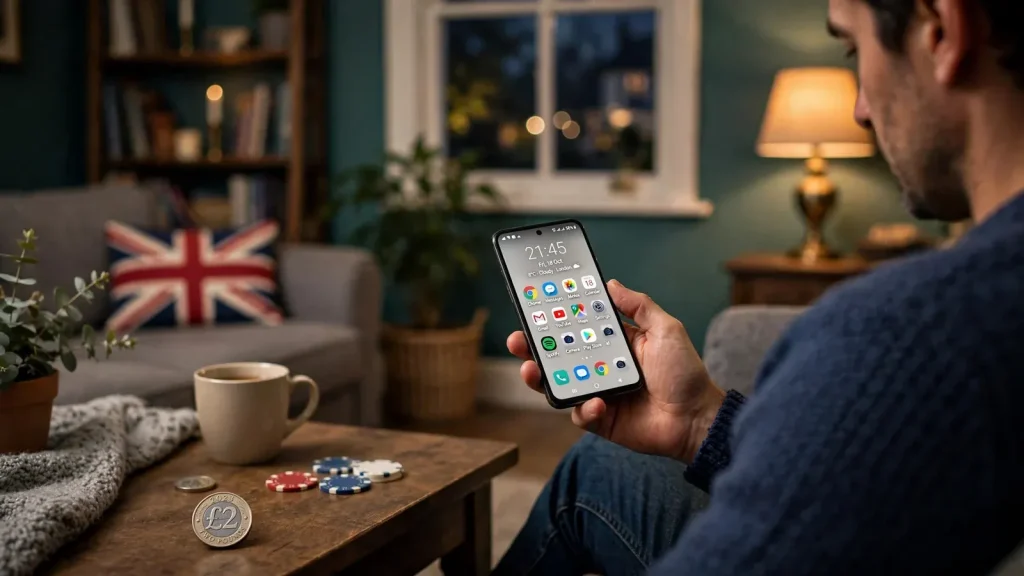
A £2 balance can be used for real-money play on a phone, but the small screen changes how you manage it. You are working with a fixed amount while tapping through menus, reading game rules and checking your balance in a compact layout. I find it helps to slow down before opening a game: confirm that you are in the real-money area, read the stake shown on screen and make sure the controls are set as you intend.
A £2 minimum deposit mobile casino is not automatically easier to use than a casino on a computer. The useful question is whether the mobile site or app makes the important details clear. Can you see your balance without hunting through menus? Are the game controls easy to distinguish from the buttons that open settings or start play? Can you reach account tools without losing track of where you are? Those small details matter more when your starting balance leaves little room for careless taps.
Before you deposit, decide what you are willing to spend and set a financial limit through the account controls. UK-licensed operators must prompt new customers to set a limit before their first deposit and provide accessible controls for managing it. Treat that limit as a boundary, not as a target to reach. A phone makes it easy to carry a session from one place to another; it does not make the money less real.
It is worth checking that the connection is private and stable before signing in. If a page reloads or a game pauses, do not rush to tap repeatedly: first check the balance and the game state. Keep your device locked when you are not using it, particularly if other people can pick it up. These are ordinary habits, but a phone is both the screen and the account doorway.

With a small balance, stake size is the main practical control you have during play. Some slots let you choose stakes in the ten-to-twenty-pence range per spin. At that level, £2 represents more individual spins than it would at a larger stake, but that does not predict how long a session will last or what it will return. Outcomes vary, and a balance can fall quickly. More chances to play are not the same thing as a better chance of winning.
On mobile, check the amount displayed before each spin rather than assuming the game has retained the setting you wanted. A game may open with controls that need a moment to understand, and a small screen can make it easier to overlook a selected stake. I would rather take a few seconds to verify it than discover I had been playing at a different level than intended. No clever trick there.
Keep the session separate from other phone use, too. Notifications, calls or switching between apps can interrupt your attention. If you need to step away, use the game’s pause or exit controls where available, then check the account balance when you return. Do not treat a brief interruption as a reason to keep playing automatically.
Real-money online casinos in the UK are for adults aged 18 and over, and operators serving British customers must hold the relevant Gambling Commission licence. If you are using a phone, take the same care you would at a computer: know your limit, check the stake before play and stop when you have reached the amount you set. A small deposit can make mobile play feel manageable, but it does not remove the need to keep control.
Bonuses on a £2 deposit: check the qualifying amount
A casino’s cashier can accept £2 without that amount unlocking its welcome offer. These are separate rules: the cashier minimum tells you how little you can deposit, while the promotion’s terms set the qualifying deposit. Before opting in, check the offer itself rather than assuming that any accepted deposit will count.
Some UK casinos exclude their lowest deposit bracket from welcome promotions. A specialist review has also reported offers with a qualifying deposit of £10 even where the casino accepts smaller deposits. Treat those details as operator-specific, not as a rule for every casino: the terms attached to the offer are what matter.
The difference can be easy to miss. You may deposit £2 and see the money in your balance, yet receive no bonus because you did not meet the offer’s qualifying amount. In other cases, an offer may be available only if you opt in, or may apply to a particular deposit rather than to every payment. Read the conditions before depositing, and check what happens if you decline the promotion. I would not count a bonus as part of my budget until the casino confirms that the deposit qualifies.
What “no-deposit bonus” means
A no-deposit bonus is not simply a welcome offer attached to a small deposit. The phrase refers to an incentive that does not require a qualifying deposit, but that does not make it unconditional or guarantee that one is available to you. Check the offer’s eligibility, any opt-in step, and the rules for using or withdrawing funds.

If a promotion does require a deposit, it is not a no-deposit offer, even if the required amount is small. And if a casino accepts £2, that fact alone says nothing about whether it provides a bonus at all. Keep the cashier minimum and the promotion’s qualifying amount separate in your head. They answer different questions.
The same care applies to search results that describe a casino as “not on GamStop”. Do not treat that label as a way around self-exclusion or a recommendation to look for an unregulated site. Remote operators serving British customers must hold the relevant UK Gambling Commission licence. If you have registered with GamStop, a bonus or a low deposit is not a reason to bypass that choice.
Check wagering rules under the 2026 cap
Bonus conditions matter even when the qualifying deposit is clear. Since 19 January 2026, the UK Gambling Commission has capped wagering requirements on gambling incentives at 10x the bonus funds. An offer cannot require more wagering than that cap allows. Check how the casino explains the requirement and which funds it applies to; the headline bonus figure alone does not tell you what you must do before any winnings become withdrawable.
A bonus may also have rules about which games contribute towards wagering and how bonus funds can be used. Do not assume that every game counts in the same way, or that accepting an offer is automatically better than playing without one. The practical question is whether you are comfortable with the conditions, not whether the offer looks large on its banner.
Wagering Requirements Cap
Since 19 January 2026, the UK Gambling Commission has capped wagering requirements on gambling incentives at 10x the bonus funds. An offer cannot require more wagering than this cap allows.
Before your first deposit, set a financial limit you can stick to. Then decide whether the qualifying amount fits within it. If the offer requires more than you intended to deposit, skip it rather than increasing your spend to qualify. A £2 cashier minimum is useful only if the deposit and the terms suit your plan. The bonus can wait.
What low stakes mean for slot play
A £2 starting balance does not go far if each spin takes a large bite out of it. The useful comparison is between the stake you choose and the money available, not the headline minimum deposit on the cashier. A slot may let you play for a small amount per spin, but that only makes the balance last longer if you keep the stake low.
Many slots let you set a spin stake somewhere between 10p and 20p. On a £2 balance, those amounts are noticeably different: choosing the higher stake uses up the starting money faster if spins return nothing. A smaller stake leaves more of the balance available for later spins, but it does not make any particular result more likely or promise a longer session.
I would treat those figures as settings to compare, not as a forecast. Every spin can win, lose or return something in between, and the balance changes as you play. If you keep raising the stake after a loss, a small deposit can disappear quickly. Set a limit before opening a slot and stop when you reach it.
Read the stake controls first
Slot games do not all present their controls in the same way. Before playing, check the total stake shown for a spin, rather than assuming the selected coin value is the amount being wagered. Some games let you adjust several elements of a stake; the displayed total is the number that matters to your balance.

Also check that the game’s minimum stake fits the amount you intend to spend. If its lowest setting is more than you are comfortable risking on one spin, choose another game. There is no need to use a higher setting simply because it is available.
A low stake can make a £2 deposit feel more manageable, but it cannot remove the basic uncertainty of slots. A run of losing spins can use up the balance, while a win can change it; neither outcome follows a timetable. Do not read a long stretch of play into the stake size alone. It is just the price of one spin.
Keep the session boundary clear
It helps to decide in advance whether the £2 is the full amount you are prepared to lose. If it is, do not treat a low stake as a reason to top up when the balance runs down. The point of choosing a small stake is to control what each spin costs, not to justify spending more.
I also avoid chasing a previous result by changing the stake in frustration. A slot does not owe you a return because the balance is low or because earlier spins went badly. Keep the stake steady if that was your plan, and leave the game when your limit is reached.
That is the practical distinction between a £2 deposit and a slot’s per-spin setting: one is the amount you put into play, the other determines how quickly each turn can use it. Choose the game and stake with that relationship in mind. Small stakes help with control, not certainty.
PayPal and other e-wallets for small deposits
PayPal can be a handy way to fund a small casino deposit, but seeing its logo on a cashier page does not tell you the minimum it will accept. Check the payment limits shown by the operator before you choose it. The cashier minimum may be the same across the available methods, although some casinos set a higher floor for direct banking than for cards or e-wallets.
That distinction matters when you are trying to deposit only a small amount. If the cashier’s minimum for PayPal is higher than the amount you planned to spend, switching to another listed method may help — but only if that method’s own limit suits you. Don’t assume the operator applies one identical threshold to every option.
There is a UK rule to keep in mind when funding the wallet. The credit-card gambling ban introduced in 2020 means your casino deposit must come from a permitted source, such as a debit card, a bank account or an e-wallet funded by debit. A wallet is not a workaround for the ban: don’t use one that allows credit-card funds to be used for gambling. Check how your wallet balance was funded, particularly if you keep more than one funding source linked to it.
I’d also check that the casino is licensed for the British market and that the payment method appears in its own cashier, rather than relying on a general list of payment options. Availability and limits belong to the operator’s current terms. A familiar wallet name alone is not confirmation that it will work for your account or for a particular deposit size.
Before depositing, set a spending limit you can stick to. UK-licensed operators must prompt new customers to set a financial limit before their first deposit, and provide account-level controls. You must be at least 18 to gamble.
PayPal or another e-wallet can make a small payment straightforward when its cashier limit fits your budget and the funds are debit-funded. If either condition fails, pause and choose a compliant option that does fit. No need to force it.

Paying by SMS: the small-deposit option to check
Pay by SMS can look like a natural fit when you want to keep a first deposit small, but the payment label alone does not tell you the cashier minimum. Mobile billing, including services such as Boku or Payforit, is associated with the rare £1 deposit tier in UK casino listings. A specialist review describes that tier as uncommon and linked to particular payment methods. That does not mean every casino offering SMS payments accepts a £2 deposit.
Before you choose it, open the cashier and check the amount shown for that specific method. Look for the minimum beside the SMS option, not just the general minimum deposit stated elsewhere on the site. If the cashier starts above £2, the casino may accept a small deposit by another route while setting a higher floor for mobile billing. If £2 is listed, make sure that amount is available to select before confirming.

I would also check that the payment method is actually offered to you and that the amount on the confirmation screen matches what you intend to deposit. Do not assume that a reference to Boku or Payforit on a general information page means it is available for every account or every deposit amount. Cashier terms are the useful detail; broad labels are not.
A low SMS minimum can be handy if you want to put only a small amount into an account, but it is not a reason to rush through registration. UK operators must verify your age before allowing a deposit, and new customers must be prompted to set a financial limit before their first one. Set a limit you are comfortable with, then check the cashier minimum and confirm only if both suit you.
Small print matters here. An SMS option may exist without supporting the exact amount you had in mind, so treat £2 as something to verify rather than assume.
Do direct banking deposits qualify for welcome bonuses at UK-licensed casinos?
Yes, direct banking deposits qualify on the same basis as card or e-wallet deposits. The bonus conditions are the same regardless of payment method, but check the qualifying deposit amount because some offers require £10.
Which payment method is best for low-deposit casino players?
A debit card is a practical option: cards are widely accepted at UK casinos and support low minimum deposits. Some e-wallets also support £1 transactions, so check the cashier’s limit for your chosen method.
What is the current minimum deposit?
The lowest UK casino deposit tier is £1, although it is rare and may be limited to certain payment methods. Direct-banking casinos typically set a £10 minimum, with some at £5 or £20.
Casinos in the UK: Deposits, Licensing and Access
Content created by the «luxurytrump» team