
Check the risks before you sign up
 Available in US
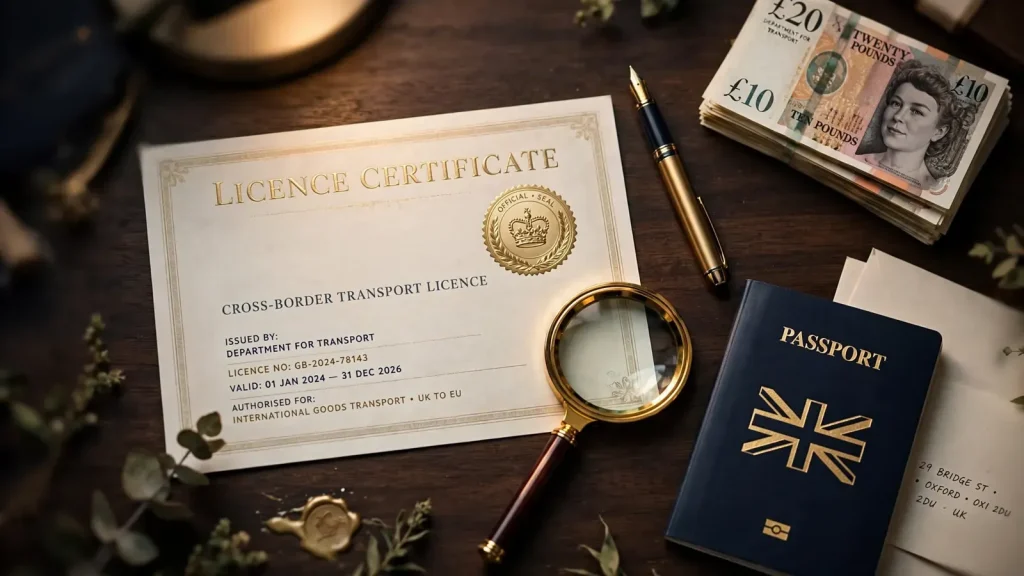
An Anjouan licence identifies a regulatory framework, but does not itself confirm independent game testing or how customer funds are held.
What an Anjouan Licence Does—and Doesn’t—Cover
An Anjouan casino licence tells you that an operator is presenting itself as licensed under Anjouan’s gambling framework. It is useful information, but it is not a general certificate of quality. The label alone does not tell you how the casino tests its games, how often its accounts are examined, or how it holds customer money.
That distinction matters when you see a site described as an Anjouan casino or as one of the online casinos licensed there. The licence points to a jurisdiction and its rules; it does not, by itself, prove that every part of the business has been independently checked. I would treat it as one piece of information about the operator, not as a shortcut for judging how the games or the casino’s wider practices have been scrutinised.
What the framework does not mandate
A key limit is that Anjouan’s framework does not require casinos to have their random number generators tested. An RNG is the software that determines the outcomes of games such as slots. Without a mandated testing requirement, the licence itself is not evidence that an independent testing body has checked that software.
If you are considering an Anjouan-licensed casino from the UK in 2026, check the licensing and access terms that apply to you before signing up. Use this list as a brief reference to the payout-speed information available for each operator.
-
WinBeast
- Payout speed
- 1-3 business days
You can use the stated payout speed of 1–3 business days as one detail to consider when assessing WinBeast.
-
Chanze
- Payout speed
- 1-3 business days
Chanze lists a payout speed of 1–3 business days, giving you a stated timeframe to consider.
-
Zombillion
- Payout speed
- 1-3 business days
The available detail for Zombillion is a payout speed of 1–3 business days, which you can factor into your assessment.
-
EvoSpin
- Payout speed
- 1-3 business days
EvoSpin lists payouts at 1–3 business days; you can take this stated speed into account.
-
Dieselwin
- Payout speed
- 1-3 business days
Dieselwin's stated payout speed is 1–3 business days, a practical detail for you to consider.
-
SlotoSport
- Payout speed
- 1-3 business days
SlotoSport lists a payout speed of 1–3 business days for you to consider.
-
NightWin
- Payout speed
- 1-3 business days
The stated payout speed for NightWin is 1–3 business days, giving you a concise point of reference.
-
SpinFormula
- Payout speed
- 1-3 business days
SpinFormula lists payouts at 1–3 business days, which may help you assess the stated payout timing.
-
Revery Play
- Payout speed
- 1-3 business days
Revery Play's available payout-speed detail is 1–3 business days, which you can factor into your review.
-
Britsino
- Payout speed
- 1-3 business days
Britsino lists a payout speed of 1–3 business days for you to consider.
That does not establish that a particular casino’s games are unfair or that no testing has taken place. An operator may make claims about its games or use third-party services, but those claims are separate from what the framework mandates. If you are relying on the licence as proof of a particular test, it cannot supply that proof.
The same distinction applies to audits. Anjouan’s framework does not mandate audits, so the presence of an Anjouan casino licence does not mean that an independent auditor has examined the operator’s business. Nor does it tell you whether the casino publishes any audit findings. Those are separate questions, not details you can safely infer from the licence label.
Player funds are another area the framework does not require casinos to segregate. That is a matter of how customer money is held, rather than how a game’s outcome is generated or checked. The absence of a requirement is worth noticing, but it should not be mistaken for proof that every operator handles funds in the same way. The practical exposure for customers is a separate issue.
Taken together, these limits mean the licence is not a single all-purpose assurance. It does not stand in for RNG testing, financial auditing, or a rule requiring customer money to be kept apart from an operator’s own funds. Each concerns a different part of the business. A licence may identify the framework under which the casino says it operates, while leaving those specific safeguards unmandated.
Read the claim narrowly
I would read an Anjouan online casino licence claim narrowly: it tells you the operator is relying on that jurisdiction’s framework, not that the framework requires every safeguard you might expect from a more extensively supervised system. The difference is easy to miss when a licence badge is displayed beside confident language about safety or fairness. A badge is not a test report.

It also helps to keep three ideas apart. Licensing identifies a regulatory framework. RNG testing concerns the software behind game outcomes. Audits concern examination of an operator’s accounts or processes. Segregation concerns how customer funds are held. A licence claim does not answer all three technical and financial questions just because it appears prominently on a casino site.
When a casino says it has checks beyond those mandated by its licence, that is a separate claim to assess. Look for what the casino says was checked and by whom, rather than assuming that the Anjouan name confirms it. The important point here is not that every operator lacks every voluntary measure; it is that the framework does not make these three safeguards mandatory.
So, if you encounter casinos with an Anjouan gaming licence, take the licence as a limited regulatory signal. It may explain which framework the operator invokes, but it is not proof of independently tested games, audited operations, or segregated player funds. Those are precisely the assumptions the licence alone cannot settle.
That is the boundary. A licence can tell you where the operator says it is regulated; it cannot quietly fill in safeguards that the framework does not require. For a player, the difference between a stated licence and a specific, evidenced safeguard is not paperwork trivia. It changes what you can reasonably infer from the label—and what you should not.
Player Funds: The Risk Behind the Licence
The balance on your account can look settled and dependable. It may show a deposit, a win or a pending withdrawal in plain figures. But with an Anjouan-licensed casino, that screen does not tell you whether the money is being kept apart from the operator’s own funds. The Anjouan framework does not guarantee that player funds are segregated.
That distinction matters most if the business fails. If the operator cannot meet its obligations, players are unsecured creditors. In everyday terms, you are owed money by a business that may no longer be able to pay. Your account balance is not the same thing as cash protected in a separate pot for you.
This does not mean every casino licensed in Anjouan mixes customer money with company money. It means the licence does not guarantee that your funds are ring-fenced. A careful operator might choose to keep funds separate, but you should not treat that as a protection supplied by the Anjouan casino licence itself.
A balance is not a safeguard
It is easy to read an account balance as if it were a bank balance. They are not interchangeable. A casino account records what the operator says it owes you; segregation concerns whether player money is kept apart from the operator’s business funds. Without a guarantee of segregation, the number displayed on screen does not establish where the money sits or what would happen to it if the company failed.
The same caution applies to a withdrawal marked as pending. It may be tempting to think that once you press the cash-out button, the funds are effectively yours and simply on their way. But until the operator pays, the practical issue remains whether it can meet what it owes. A pending status is not proof that funds have been reserved separately.
I would keep that distinction in mind before depositing, not just when a withdrawal takes longer than expected. It is much easier to assess the exposure while your money is still in your own account than to discover the difference between an on-screen balance and protected funds after a business problem.
What “unsecured creditor” means for you
If an operator fails while owing you money, your position is that of an unsecured creditor. You are not promised a separate pool of player funds from which your balance will automatically be paid. There may be a claim to make, but the key point is that the Anjouan framework does not guarantee a protected pot or a particular recovery for customers.
That is the specific financial risk behind the licence. It is not a prediction that a particular casino will fail, nor does it mean every player will lose money. It means that if the operator does fail, you cannot rely on fund segregation as a safeguard provided by this licensing framework.
A small remaining balance still counts. So does a larger win you have not withdrawn. The amount changes how much you have at stake, but not the basic position: if the operator owes you funds and fails, you are an unsecured creditor. The account interface cannot change that status.
Keep your exposure in view
Before sending money to an Anjouan-licensed casino, decide what you can afford to have tied up with that operator. Do not treat a displayed balance as though it were protected savings, and be especially deliberate about leaving a large amount sitting in an account. That is a practical way to limit exposure, not a guarantee that a withdrawal will be paid.
If you have already deposited, keep your own records of payments, balances and withdrawal requests. Those records can help you keep track of what you believe you are owed. They do not turn your funds into segregated funds, and they cannot ensure recovery if the business fails. Still, relying only on an account screen leaves you with less clarity about your own transactions.
There is a difference between trusting an operator’s day-to-day service and having a formal safeguard if the operator collapses. A casino may process ordinary activity without trouble; that does not establish how player money would be treated in a failure. The absence of a guarantee is the point, even when everything appears to be working normally.
I would not read “licensed” as meaning “player funds protected” here. The licence can identify the framework an operator claims to work under, but it does not guarantee that customer money is segregated. If the operator fails, players are unsecured creditors. Keep that risk separate from the question of whether the games or the website seem polished. A tidy account page is not a safety net.
What UK Players Should Know Before Using an Anjouan Site
An Anjouan online casino may be available to someone in Britain, but availability is not the same as UK regulation. A non-UK-regulated casino operates outside the oversight of the UK Gambling Commission (UKGC). An Anjouan licence comes from a different jurisdiction; it does not make the casino part of the UK regulatory system.
The distinction matters because the rule for operators serving Great Britain is based on where their customers are, not simply where the business is registered. An operator offering gambling to customers in Great Britain must hold a UKGC licence even if it is based abroad. A licence issued in Anjouan does not take the place of that requirement.

That is the operator’s position. The legal position for an individual player is different. UK law does not make it a criminal offence for a player to use an unlicensed gambling site, and it does not expressly bar British citizens from gambling with services licensed overseas. Those points do not turn an Anjouan licence into permission to operate in Great Britain, nor do they give you the protections attached to a UKGC-regulated site. Operator obligations and player liability are separate questions.
I would keep that distinction in view before signing up. A site can accept your registration while remaining outside the UKGC system. The fact that a page is accessible, or that the casino displays a foreign licence, does not establish that it holds the authorisation required to serve the British market. You are responsible for checking the local laws and understanding the implications of using an offshore gambling service.
What changes outside UKGC regulation
UKGC-licensed operators are subject to British requirements for player protection. A non-UK-regulated casino may have less demanding responsible-gambling and data-protection rules. That means you should not assume that controls familiar from a UK-licensed site will be available in the same form, or that the same standards apply to how your information and gambling activity are handled.
You also give up access to protections tied to the UK system. Players at offshore casinos cannot rely on the UK’s Financial Ombudsman Service in the way they could in a matter covered by that service, and they do not receive the mandatory responsible-gambling tools required of UKGC-licensed operators. If you are used to seeing familiar controls on British sites, do not treat their appearance—or a general promise of safer play—as proof that the UK requirements apply.
A useful practical check is to consider what you would do if you wanted to pause or limit your gambling. UK-regulated services have mandatory tools within the regulatory framework; an Anjouan site is outside that framework. Do not assume a particular UK protection will carry over just because the casino takes customers from Britain.
GamStop has a limited reach
GamStop is the UK Gambling Commission’s self-exclusion scheme. Casinos outside that scheme are not connected to it, so registering with GamStop does not block access to a non-UK-regulated casino. If you have self-excluded, an Anjouan site should not be treated as a safe alternative or as an extension of that exclusion.
This is an important difference between being able to reach a site and having a protective measure apply to it. A casino may be available online while sitting beyond the scheme you chose to use. If you rely on self-exclusion to manage gambling, check the scope of that commitment and avoid assuming it covers services outside the UKGC system.
The same care applies to other responsible-gambling features. A non-UK-regulated casino may offer its own controls, but that does not make them the mandatory UK tools or bring the operator under UKGC oversight. Read what the site actually provides rather than inferring protection from a familiar label.

A practical way to think about the choice
When you encounter an Anjouan-licensed site, separate three questions: who issued its licence, whether it holds the UKGC authorisation required to serve Great Britain, and what protections you would have if something went wrong. The first answer does not settle the second or third.
If you choose to use a non-UK-regulated casino, go in knowing that the UKGC is not supervising it and that UK-linked protections do not automatically follow you there. That is not a judgement about every individual operator; it is the practical boundary between the two regulatory systems. No UK safety net.
Bonuses: Read the Wagering Terms Before You Count the Win
A welcome offer can make an Anjouan casino bonus look larger than the cash you can actually withdraw. The headline figure is only the start: the wagering requirement, what counts towards it, the expiry date and any cap on winnings all affect what happens next. I’d read those terms before opting in, not after a win has landed in the bonus balance.
A specialist review reports that some offshore welcome bonuses carry wagering requirements of 35x or more. That figure is not a rule for every offer, and the multiplier alone does not tell you the total amount of play required. Check what it applies to. In one offer, the calculation may be based on the bonus; in another, the deposit and bonus may be combined. A specialist review also describes a 40x requirement that can apply to the bonus and deposit together, to the bonus alone, or to the bonus and free spins together, depending on the offer.
Wagering Multipliers
Some offshore bonuses carry requirements of 35x or 40x, which may apply to the bonus alone or the combined deposit and bonus.
Free Spin Limits
winnings may face wagering of 30–50 times, with withdrawal caps often ranging between £5 and £50.
Expiry Windows
Free-spin packages can have very short validity periods, sometimes expiring within 24–72 hours.
That difference changes the arithmetic considerably. If the terms say the deposit is included, the qualifying balance may be larger than the bonus itself. If they say the bonus only, the deposit may not count towards the target. Do not assume: find the wording that defines the calculation, and check whether every game contributes equally. If the terms are vague, the advertised offer is hard to value.
Free spins need their own close read. A specialist review reports that winnings from free spins may face wagering of 30–50 times those winnings, as well as a withdrawal cap between £5 and £50. That can leave a large gap between the amount shown after a spin and the amount eligible to withdraw. Look for whether the cap applies to the winnings from the spins or to the overall bonus balance, and whether the winnings must first clear a separate wagering condition.
The clock matters too. One specialist review describes free-spin packages expiring within 24–72 hours. Treat that as a reported range, not a promise about every casino or offer. The terms should say when the period starts and what happens to unused spins or unsettled winnings when it ends. A short window is easy to miss if you accept the offer and then do not play straight away.
I would also look for restrictions that sit beside the headline multiplier: which games qualify, whether a maximum bet applies while wagering, and whether opting into one promotion prevents you from using another. Those details belong to the offer’s own terms; do not infer them from a banner or from a previous promotion at the same site.

Before claiming, take a moment to save or note the terms as displayed. Bonus conditions can differ between promotions, so an older offer or a general bonus page may not describe the one in front of you. If the stated wagering target, expiry or cap is unclear, ask the operator to explain it before you accept. A bonus is optional. The fine print is not.
Anjouan Gaming Licences and Their Limits
An Anjouan gaming licence is not a passport to offer gambling everywhere. It applies within the scope set by its own framework; it does not give a casino permission to operate in the United Kingdom or in other markets where its licence does not authorise it. That distinction matters if a site presents its Anjouan status as though it settles whether it can serve customers in a particular country. It doesn’t.
I’d read the licence as a statement about the operator’s relationship with Anjouan’s regulator, not as a universal approval stamp. A casino may hold an Anjouan licence and still be outside the rules that apply in a market it wants to enter. The location of the regulator and the location of the customer are separate parts of the picture.
That can be easy to miss when a site uses broad wording such as “internationally licensed”. It may sound as if one approval covers every country, but the licence has limits. Anjouan authorisation does not remove restrictions imposed by other markets, or extend to places where the operator is not permitted to offer its service.
So what does the licence tell you? It indicates that the operator is licensed under Anjouan’s framework. It does not, on its own, establish that the casino is authorised in the UK or elsewhere. The practical point is simple: don’t treat a regulator’s name in a footer as proof that the site can lawfully serve customers wherever they happen to live.

There is also a formal timing rule for complaints. Under Anjouan’s framework, an operator must respond to a complaint within 30 calendar days. “Respond” is the important word here: the requirement sets a timeframe for the operator to reply. It is not a statement that a complaint will be settled in your favour, or that the reply will resolve the issue.
If you raise a complaint, keep a copy of what you sent and note when it was submitted. That gives you a clear record of the exchange and makes it easier to see whether the operator has replied within the required period. Keep the complaint focused on the issue, with the relevant account details and any messages that explain what happened. A tidy record beats a long chain of angry emails.
The 30-day requirement is a rule within the Anjouan framework, not a general promise about how quickly every casino will handle a problem. Nor should it be read as permission to operate in a market that the licence excludes. Those are separate questions: one concerns how an operator is expected to respond to a complaint; the other concerns where it is authorised to offer gambling.
For a reader comparing casinos with an Anjouan licence, the useful distinction is between holding a licence and having authority in the customer’s market. The first does not automatically prove the second. The complaint-response deadline is similarly narrow: it sets a formal expectation for a reply, not a wider guarantee about what happens next. Small print, but important.

How to Check an Anjouan Casino Site Before You Sign Up
Before you create an account, treat the licence badge as a lead, not proof. Open the site’s terms or legal page and note the operator’s full company name, the Anjouan casino licence number and any stated expiry date. A logo on the homepage is easy to display; the details need to line up elsewhere.
Look for the licence entry in Anjouan’s public register. Check that the company name and licence details shown there match the site, and that the licence has not expired. If the site gives a different company name in its terms, or the register entry is hard to find, pause rather than guessing that the businesses are connected.
Then check whether the operator identifies itself consistently. Compare the company named in the terms with the name on the licence entry and the contact details on the site. Read the withdrawal and account terms before handing over personal information or depositing: you want to know which company you would be dealing with if something went wrong. Keep a copy of the relevant pages, since online terms can change.
A licence check has limits. Anjouan’s framework does not require casinos to have their random-number generators tested, undergo audits or keep player funds segregated. So a matching entry can help confirm the stated licensing details, but it cannot establish that games have been independently tested or that the operator meets standards beyond the framework.
I would not sign up simply because a site says it is licensed. If its company identity is unclear, its licence details do not match the public entry, or key terms are missing, walk away. That small check is more useful than a polished badge.
- Verify the operator's full company name and licence number in the terms
- Match the licence details against Anjouan's public register
- Confirm the licence has not expired
- Review the withdrawal and account terms for consistency
New Anjouan Casinos: Take Extra Care at Cash-Out
A casino that is new to you may look straightforward when you open an account, but the withdrawal stage can bring extra identity checks. A specialist review has reported that some offshore operators may ask customers for notarised documents or a video call before releasing funds. That is a reported possibility, not a standard step at every Anjouan casino.
The practical point is to find out what verification could involve before you deposit. Read the withdrawal and identity-check terms, and look for wording about documents, how they must be certified, and whether a live call may be required. If the terms are vague, ask the operator to explain the process in writing. Keep a copy of the reply and the terms you relied on.
If you are asked for additional evidence after requesting a withdrawal, follow the stated instructions carefully and keep records of what you submit and when. Avoid sending documents through a channel you cannot confirm belongs to the casino. If a video call is requested, ask how it will be arranged and what you will be expected to do. Do not assume that completing ordinary account checks at registration means no further checks can arise later.
These steps cannot guarantee a quick payout, and they do not remove the risk of delay or an account being held for review. They can, however, help you spot an unclear process before money is involved and leave you with a record if the requirements change or become difficult to follow. Take the friction seriously. Cash-out is where vague terms stop being theoretical.

Crypto Payments at Anjouan Casinos
Some non-UK-regulated casinos accept cryptocurrency, sometimes through an alternative payment processor rather than a direct transfer to the operator. That can make the payment route less obvious than a card checkout: check which service handles the transaction, what asset it accepts, and what instructions apply before you send anything.
Crypto payments can bypass the UK ban on gambling funded by credit cards. That describes the payment route, not a stamp of approval. Using cryptocurrency does not turn an Anjouan casino into a UK-licensed operator, and it does not give you the protections attached to a UKGC-regulated site. If you are considering an Anjouan crypto casino, separate the question of how you pay from whether the service is permitted to serve you.
Also, do not assume that a deposit method is automatically available for withdrawals. A casino may accept crypto deposits while setting different conditions for cashing out; read the payment terms and account rules before transferring funds. Keep a record of the payment instructions and transaction details, and make sure you understand what the operator says will happen if a transfer is delayed or sent incorrectly.
The same caution applies to other payment routes. Offshore sites may offer cards, e-wallets, bank transfers or crypto through alternative processors, but a menu of deposit options is not a promise that every route works both ways. Treat each method as a separate arrangement.
Do
- Check which service handles the crypto transaction
- Verify if the deposit method is available for withdrawals
- Keep a record of all payment instructions and transactions
Don't
- Assume a coin logo guarantees a safe payment route
- Assume crypto payments provide UKGC-level protections
- Send assets without checking the laws in your jurisdiction
I would not send cryptocurrency simply because it appears beside a familiar coin logo. Check the operator’s terms, the processor’s role and the destination details carefully. A blockchain transfer may not be reversible through your bank if you make a mistake. And before using any offshore gambling service, check the laws that apply where you live and understand the implications. Crypto changes the payment method; it does not remove the need to make that decision carefully.
What to Look for in an Anjouan Casino Review
When I read reviews of an Anjouan casino, I look for more than game choice or a polished site. The useful question is what happens when you and the operator disagree. A review that praises the sign-up experience but says nothing about complaints leaves out the part that matters when something goes wrong.
Start with the route the review says you can use. Can you contact the casino directly, and does the reviewer explain how the operator responded to a complaint? Look for concrete detail: what the issue was, what evidence was supplied, and whether the response addressed it. A claim that support is “helpful” is not the same as an account of a dispute being resolved.
Then check what the review says about escalation. The Anjouan authority does not take up, mediate or decide complaints between players and casinos. An Anjouan casino also does not offer an independent dispute-resolution route equivalent to the approved alternative dispute resolution services available through the UK system. That distinction is easy to miss if a review simply points to a licence badge or says the site is regulated.
In practice, you may have to rely on the operator’s own complaints process. Read whether the review explains how to submit a complaint and what records to keep, such as messages, transaction details and screenshots. If the review does not describe any way to take a dispute beyond customer support, treat that as a meaningful gap, not a minor omission.
I also pay attention to whether complaints are discussed at all. A review can cover a smooth deposit and a quick reply to a routine question without showing how the casino handles a contested withdrawal or account decision. Those are different tests. User reports can add context, but one account is not proof of a general pattern; look for detail and consistency rather than a confident star rating.
If you cannot identify a credible escalation route before signing up, assume there may be little independent help if a dispute arises. That is the point to weigh before you play.
Anjouan as an Offshore Casino Jurisdiction
“Offshore” is a broad label, not the name of one regulator or a single set of licensing rules. In the UK market, it commonly describes a non-UK-regulated casino operating outside the UK Gambling Commission’s oversight. The jurisdiction named on a casino’s licence tells you where its licensing authority is based; the label alone does not tell you how that authority works.
Anjouan is one jurisdiction associated with non-UK-regulated casinos. It is not the only one: Malta, Curaçao and Gibraltar are also commonly named in this part of the online gambling market. Those places should not be treated as interchangeable simply because their licences may be described as offshore. Each is a separate jurisdiction, and the wording on a casino’s site is not, by itself, a comparison of the rules behind its licence.

I find it useful to separate two questions when someone says a casino is offshore: where is it licensed, and which regulator oversees it? “Anjouan-licensed” gives you a more specific answer to the first question than “offshore”, but it does not make the broader label a quality rating. Nor does seeing another jurisdiction’s name tell you whether a particular casino is suitable for you.
The practical point is simple: a list of licensing locations is context, not a ranking. Malta, Curaçao, Gibraltar and Anjouan are all associated with non-UK-regulated casinos, but that shared association does not establish that their licensing arrangements are identical. If you come across a casino described only as offshore, look for the jurisdiction it actually names. If it names Anjouan, assess it as an Anjouan-licensed site rather than assuming the term means the same thing as a licence from somewhere else.
Labels travel easily. Meaning does not.
Are gaming sites not on GamStop permitted for UK players?
You do not commit a criminal offence under UK law by gambling on an unlicensed site. However, operators serving customers in Great Britain must hold a UK Gambling Commission licence, and sites outside that system are not overseen by the Commission.
Is it legal for a UK player to gamble at an Anjouan-licensed casino?
UK law does not explicitly prohibit you from using gambling services licensed in another country, and players do not commit a criminal offence by gambling on an unlicensed site. An Anjouan licence does not authorise the operator to serve the UK market; operators serving Great Britain need a UK Gambling Commission licence.
Are Anjouan casinos connected to the GamStop self-exclusion scheme?
No. Anjouan-licensed casinos are not required to integrate GAMSTOP, and casinos outside the UK Gambling Commission system are not part of its self-exclusion scheme.
Can I complain to the Anjouan regulator if a casino won't pay me?
No. The Anjouan authority does not handle or adjudicate player complaints, and Anjouan-licensed casinos do not provide an independent dispute-resolution route comparable to UKGC-approved services. Operators must respond to complaints within 30 calendar days.
How do casinos outside GamStop operate?
They operate outside the UK Gambling Commission’s oversight, typically under licences from other jurisdictions, and are not part of GamStop. Operators serving customers in Great Britain still require a UK Gambling Commission licence.
Can UK players legally play at casinos licensed in Anjouan?
UK law does not explicitly prohibit you from using gambling services licensed in another country, and players do not commit a criminal offence by gambling on an unlicensed site. An Anjouan licence does not authorise the operator to serve the UK market; operators serving Great Britain need a UK Gambling Commission licence.
Casinos in the UK: Deposits, Licensing and Access
Content created by the «luxurytrump» team